15 taken to hospital after two lorries collide in Jurong West
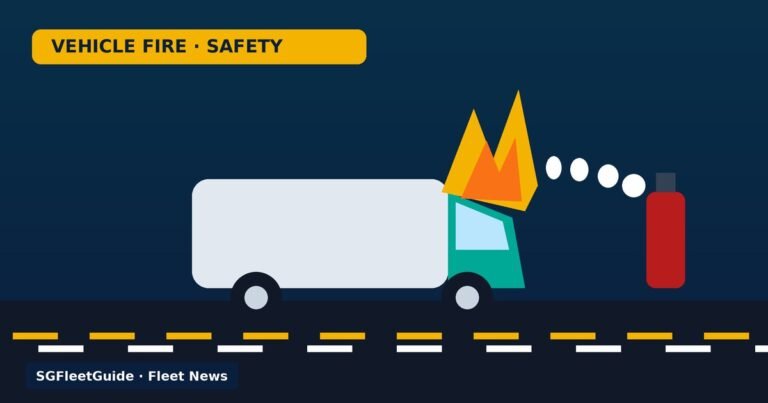
Those hurt were a 22-year-old lorry driver and 14 male passengers aged 25 to 52. SCDF took 10 of them to Ng Teng Fong General Hospital and five to National University Hospital. The driver is assisting with investigations, which are ongoing. The police did not say which lorry the passengers were in or where they were sitting.
The crash came in the same week as two fatal accidents involving heavy vehicles, in Katong on 11 November and Changi on 12 November. Mid-year Traffic Police figures cited in the report show injury accidents rose from 3,748 in the first half of 2025 to 3,869 in the same period of 2026.
What this means for fleet operators
This matters most to construction, marine, landscaping and facilities firms that move work crews by lorry. The cause of this crash has not been made public, so use it as a reason to check your own setup rather than to draw lessons about these drivers. When one lorry carries a whole crew, a single collision can put a dozen workers in hospital and stop a site for days.
WorkRightSG, a sister site, explains whether workers hurt in company transport can claim work injury compensation.
Compliance check
The 2022 inter-agency advisory on safe transportation of workers from MOM, MOT, LTA, SPF and BCA sets out the rules for lorries carrying workers in the rear deck. Check each lorry and each crew against these points:
- All front passenger seats in the cabin are filled before anyone rides in the rear deck.
- The rear deck carries no more workers than the minimum space rule of 0.372 square metres per seated worker allows, and the Maximum Passenger Capacity label is displayed on the right side of the rear tailboard.
- Canopy, protective side railings and rain covers are fitted as required.
- Any goods carried with workers are lashed so they cannot slide when the lorry brakes or turns.
- A vehicle buddy sits beside the driver whenever workers are in the rear deck, and has been briefed to check the driver is alert.
- Dual-role drivers who have worked at least six hours get a rest of at least 30 minutes before driving workers.
Separately, MOT and LTA will ban ferrying workers in caged lorry decks from 1 January 2027. Caged lorries can still carry goods and equipment, and LTA says owners who want to keep carrying workers can convert the rear deck to a canopy with side railings. Penalties will apply, with details to be shared before the ban starts.
What to do now
- List every lorry that carries workers, how many it is labelled for, and who drives it. Flag any caged decks that need converting before 1 January 2027.
- Book conversions now if you need them. A lorry in the workshop is a crew you must move another way.
- Review start times and routes. If drivers are rushing to hit a site start time, shift the schedule rather than the risk. The advisory says employers should avoid incentives that push drivers to rush.
- Check driver hours. Under the Employment Act guidance in the advisory, drivers carrying workers in the rear deck should not work more than 12 hours a day in total. Our guide to fatigue management for commercial drivers covers rostering.
- Where a bus or van is practical, use it. The advisory asks employers to consider other modes first, and our guide to passenger van and worker transport sets out the options.
Driver briefing
- Walk round the lorry before the first trip: tyres, lights, canopy, railings and rain covers. Use our pre-trip inspection checklist.
- Count the crew against the capacity label before moving off. If there are too many, call the supervisor and do not drive.
- Workers stay seated for the whole trip and nobody climbs on or off until the lorry has stopped.
- Tell the vehicle buddy or supervisor if you feel tired. A late crew is better than an injured one.
Source: The Straits Times, 18 November 2026 — Read the original
General information, not legal advice.