Commercial Vehicle Maintenance Schedule in Singapore: How Often to Service Vans, Lorries and Trucks
LTA’s periodic inspection is a legal roadworthiness check with fixed intervals (annual for most goods vehicles under 10 years, six-monthly once they pass 10 years). Servicing — oil changes, brake pads, cooling system work — is a separate, manufacturer- and usage-based maintenance decision that LTA does not mandate a schedule for. A well-run fleet treats inspection dates as fixed anchor points and builds its own service intervals around actual mileage and duty cycle, not a generic calendar rule.
Key Takeaways
- Inspection and service are not the same thing. One is a legal roadworthiness check with LTA-set intervals; the other is preventive maintenance you schedule yourself based on the manufacturer’s guidance and how hard the vehicle works.
- There is no single “correct” Singapore service interval. Manufacturer manuals set the baseline; usage intensity (distance, load, stop-start traffic, idling time) determines whether you should service more often than the book suggests.
- High-mileage vans and lorries need shorter intervals than the manual’s default assumption. A courier van doing 200km a day of stop-start city driving wears differently from the same model used twice a week for light deliveries.
- Tyres deserve their own line item on goods vehicles. Load, tyre pressure discipline and kerb contact in tight loading bays accelerate wear on commercial vehicles more than on passenger cars.
- Singapore’s climate is hard on cooling systems. Constant heat, humidity and stop-start traffic put more thermal load on engines than temperate-climate service manuals assume.
- Unplanned downtime costs more than the service you skipped. A breakdown on a delivery run costs the missed job, the recovery, the repair, and often a customer.
Two Different Obligations: Inspection vs Service
Fleet owners in Singapore often lump “inspection” and “servicing” into one mental bucket — both involve sending the vehicle somewhere to get looked at, so why distinguish? Because they answer to different masters, and confusing them is how fleets end up legally compliant but mechanically unreliable, or vice versa.
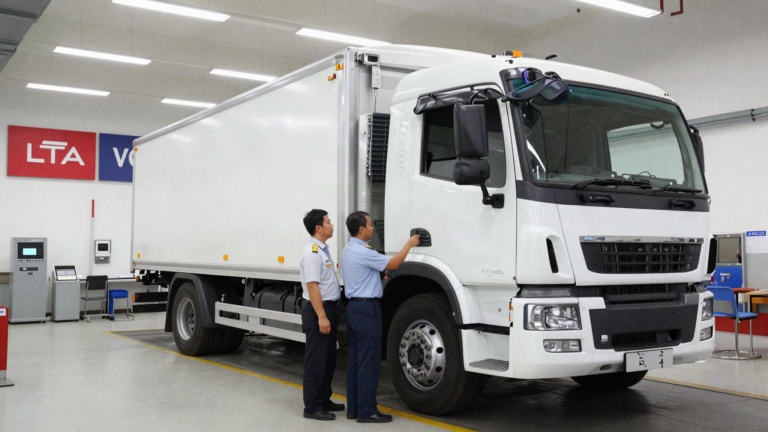
The LTA periodic vehicle inspection is a statutory roadworthiness and emissions check. It is not optional, the intervals are fixed by vehicle age and category, and failing it means your vehicle cannot legally stay on the road until it passes a re-test. We’ve covered the inspection regime — schedules, what inspectors check, and how to avoid failures — in a dedicated article: LTA Vehicle Inspection for Commercial Vehicles in Singapore. We won’t repeat that ground here.
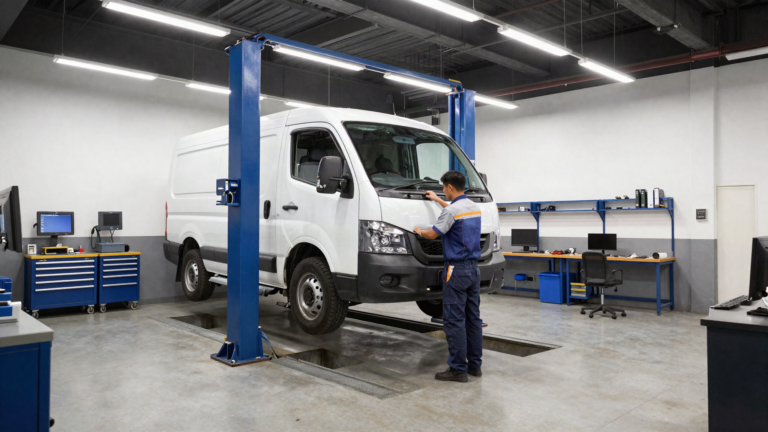
Servicing is different in kind, not just in name. It’s the preventive maintenance a manufacturer recommends to keep a vehicle running reliably and to preserve the powertrain warranty — oil and filter changes, brake inspections, coolant checks, belt and hose replacement, and so on. LTA does not set a service interval for your fleet. That’s a business decision you make based on the manufacturer’s manual, how the vehicle is actually used, and how much unplanned downtime you’re willing to tolerate.
The practical risk of treating these as one thing is that a vehicle can sail through its LTA inspection — brakes within spec, emissions passing, structure sound — while still being poorly serviced in ways that don’t show up on an inspection checklist: a neglected transmission, tyres nearing the wear bar, a coolant system running hotter than it should. Passing inspection tells you the vehicle is legally roadworthy on the day of the test. It tells you nothing about whether the engine oil is due, or whether the brake pads have another 5,000km in them.
How Often Should You Service a Commercial Vehicle?
There’s no single number that applies across a mixed fleet, and any article that hands you one specific figure “for Singapore” is guessing. Start with the manufacturer’s service schedule for the specific model and engine — it’s in the owner’s manual and usually built around a distance interval, a time interval, or whichever comes first (commonly somewhere in the 10,000–15,000km or 6–12 month range for light commercial vehicles, though this varies significantly by make, engine type, and oil specification). Treat that as the baseline, not the answer, and adjust for how the vehicle is actually used.
High-intensity usage
Vans and lorries doing daily multi-stop delivery runs, taxi-style shift work, or continuous short trips in city traffic put more wear on an engine per kilometre than the same distance covered on a highway run. Frequent cold starts, extended idling while loading or unloading, and stop-start traffic all shorten the effective life of engine oil and increase brake wear. Manufacturers usually publish a “severe service” or “heavy duty” interval alongside the standard one — for a Singapore delivery fleet doing mostly urban stop-start driving, the severe-service interval is usually the more honest baseline, not the standard one.
Light or occasional usage
A lorry that only goes out two or three times a week, or a standby vehicle kept for peak-season overflow, accumulates distance slowly but still ages by time — rubber perishes, fluids degrade, and batteries weaken from disuse regardless of odometer reading. For these vehicles, the time-based interval in the manual (not the distance-based one) usually becomes the binding constraint. A vehicle sitting mostly idle still needs a service on the calendar, even if the odometer suggests otherwise.
Mixed and seasonal usage
Most SME fleets sit somewhere between these extremes and shift between them — a van that’s in heavy use during a project and light use afterwards. The practical answer is to track actual mileage per vehicle rather than assuming a fleet average, and flag any vehicle that crosses its interval threshold early, rather than waiting for a fixed calendar date that assumes uniform usage across the fleet.
What Typically Needs Checking, and Why It Matters More for Goods Vehicles
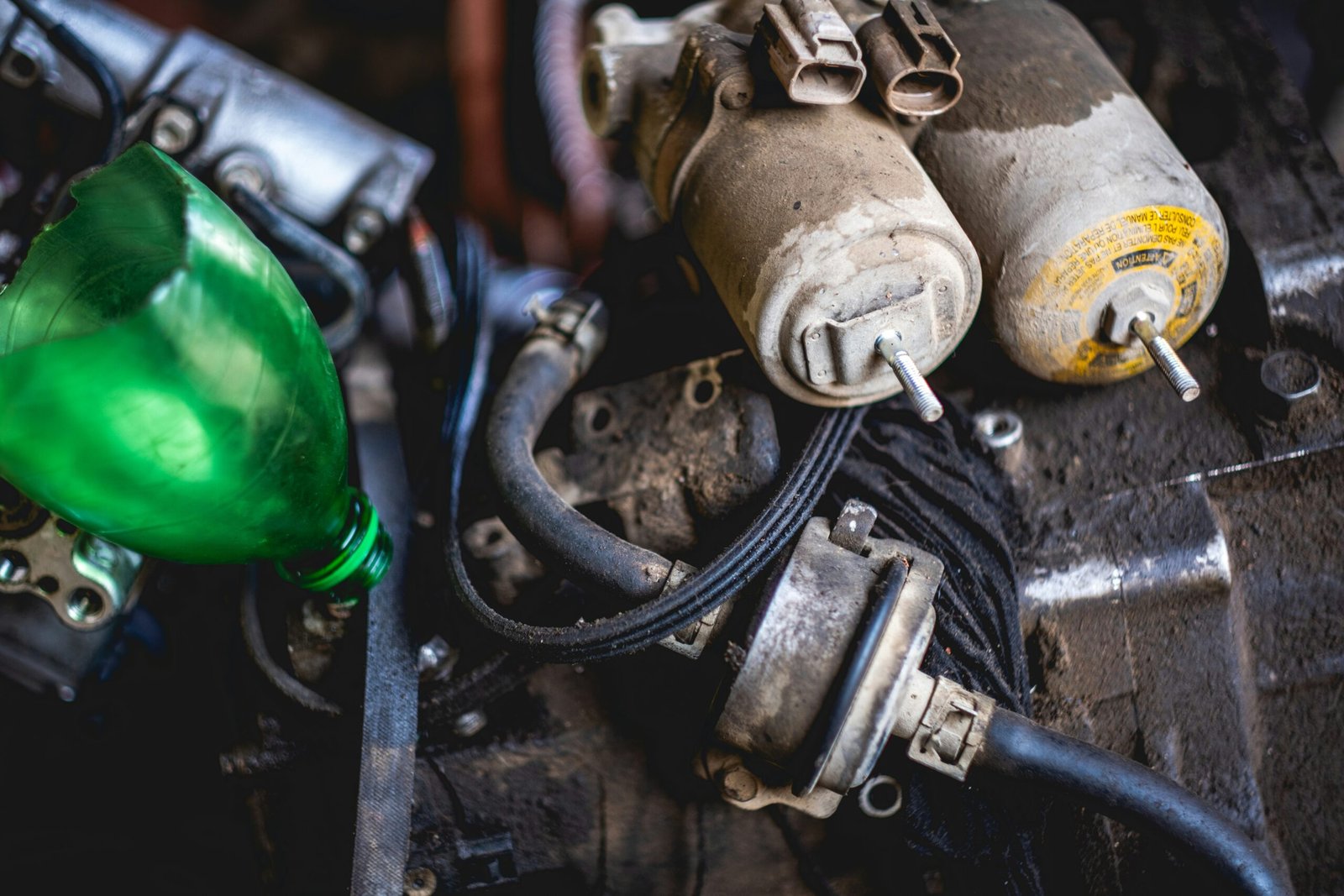
The core service items are the same ones every car owner knows, but they carry different stakes on a loaded commercial vehicle.
Oil and filters
Engine oil breaks down faster under load, heat and stop-start driving — exactly the conditions most Singapore commercial vehicles operate in. Skipping an interval on a lightly-loaded car might cost you a bit of engine longevity over years; skipping it on a lorry running near its maximum laden weight accelerates wear on components that are already working harder.
Brakes
A loaded goods vehicle needs significantly more stopping force than the same vehicle empty, and brake components wear faster under load and in stop-start city traffic. Brake inspections should happen more frequently than the oil-change interval alone would suggest, particularly for vehicles that run consistently near their maximum laden weight or spend most of their time in congested traffic.
Tyres
This is where commercial vehicle maintenance genuinely diverges from passenger car maintenance. Heavier and unevenly distributed loads, frequent kerb contact in tight loading bays, and extended time spent stationary under load all accelerate tyre wear and increase the risk of uneven wear patterns. Under-inflation is a particular risk on goods vehicles because the consequence of running under-inflated under load is more severe — higher heat build-up, faster wear, and a materially higher blowout risk than the same issue on a lightly-loaded car. Tyre pressure and tread depth checks deserve their own item on the service checklist, checked more frequently than a full workshop visit, not folded into it.
Cooling systems
Singapore’s climate — consistent heat and humidity, combined with stop-start traffic that gives engines less airflow to cool themselves — puts more sustained thermal load on cooling systems than the conditions many manufacturer service manuals are calibrated around. Coolant condition, hose integrity and radiator condition are worth checking on a shorter interval than a temperate-climate manual might imply, especially on vehicles that spend a lot of time idling in traffic or queuing to load.
A blown tyre or a brake failure on a loaded lorry doesn’t just cost the repair. It costs the missed delivery window, the recovery truck, the driver’s idle hours, the customer’s confidence, and — if it happens at the wrong moment — a damaged load or an accident claim. The service you skip to save a few hundred dollars is rarely the number that shows up on the eventual bill.
Building a Maintenance Schedule Across a Mixed Fleet
Most SME fleets aren’t one vehicle type bought on one date — they’re a mix of vans, lorries and the occasional heavier truck, acquired at different times, running different duty cycles. Managing that without a system means maintenance either clusters around whenever someone remembers, or gets pushed back indefinitely because no single vehicle feels urgent on any given day. A few practical habits fix this.
Use inspection dates as fixed anchor points
Since LTA inspection dates are fixed and non-negotiable, use them as scheduling anchors for the rest of your maintenance calendar. Book a service shortly before each inspection so any issue a service would catch — worn brakes, a failing component — gets fixed before the vehicle goes in for its legal roadworthiness check, rather than risking a failed inspection and a scramble to fix and re-test.
Stagger by vehicle, not by fleet
Track each vehicle’s service due date independently based on its own mileage and usage pattern, rather than servicing the whole fleet on one calendar date. Staggering also spreads the cost and the vehicle-off-road time across the year instead of concentrating it into one expensive month where half your fleet is in the workshop simultaneously.
Keep records per vehicle
A simple spreadsheet or fleet management system tracking registration number, last service date, mileage at last service, and next due date is enough for most SME fleets — the tool matters less than the discipline of updating it every time a vehicle goes in. This record-keeping also matters commercially: a documented service history supports resale value and is something a workshop or insurer may ask about after an incident, which connects to how you’ve structured your commercial vehicle insurance and any conditions tied to it.
Match the schedule to the vehicle’s remaining useful life
A vehicle nearing the end of its COE life warrants a different maintenance conversation than a newly registered one — see our breakdown of COE Category C for how that timeline affects goods vehicle ownership decisions. Sinking a large service bill into a vehicle with a year of COE left is a different calculation from doing the same on a vehicle with five years ahead of it, and that calculation should factor into how aggressively you chase every recommended service item versus deferring lower-priority ones.
The Cost of Neglect: What I’ve Seen in Practice
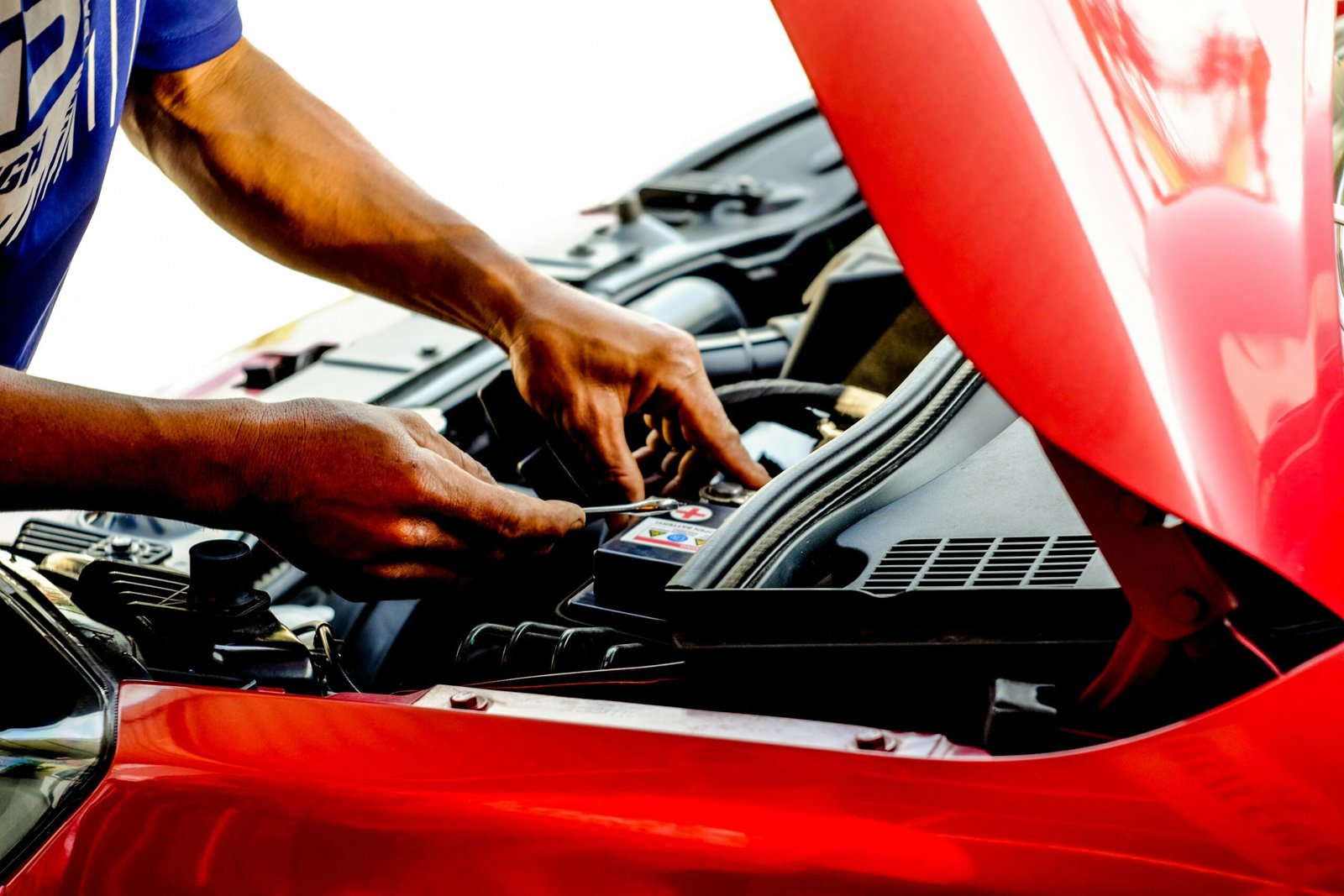
The case for a disciplined service schedule isn’t theoretical. Over 25 years around Singapore’s commercial vehicle sector, the pattern repeats: a fleet defers servicing to save cash in a tight month, and the bill that eventually arrives is bigger than the one avoided.
A breakdown mid-route doesn’t just cost the tow and the repair. It costs the job that didn’t get delivered, the driver sitting idle waiting for recovery, and — if it happens often enough — a customer who stops trusting your reliability and moves their contract elsewhere. None of that shows up on the workshop invoice, but it’s the real cost of a deferred service.
There’s also a resale dimension that fleet owners underweight. A vehicle with a complete, documented service history sells for more and sells faster than one with gaps in the record, even if the second vehicle is mechanically fine — buyers price in the uncertainty of what they can’t verify. For a fleet that regularly cycles vehicles in and out as COE terms run down, that difference compounds across every disposal.
None of this means over-servicing every vehicle on the shortest possible interval regardless of cost — that’s its own form of waste. It means matching the interval to the vehicle’s actual duty cycle, tracking it consistently, and treating deferred maintenance as a cost you’re choosing to pay later, with interest, rather than a cost you’ve avoided.
FAQ
Is servicing a commercial vehicle a legal requirement in Singapore?
No. The LTA periodic inspection is the legal roadworthiness requirement, with fixed intervals by vehicle age and category. Servicing is not separately mandated by LTA — it’s a maintenance practice you follow to keep the vehicle reliable and, in most cases, to preserve the manufacturer’s warranty.
Does passing LTA inspection mean my vehicle doesn’t need a service?
No. Inspection checks roadworthiness and emissions compliance on the day of the test. It does not check whether your engine oil is due, whether the transmission fluid has degraded, or whether tyres are approaching the end of their useful tread life within safe margins. A vehicle can pass inspection and still be overdue for a service.
How often should I service a delivery van doing daily city runs?
Follow the manufacturer’s “severe” or “heavy duty” service interval rather than the standard one, since stop-start city driving and frequent cold starts count as severe usage in most manufacturer schedules. Check the specific model’s manual — intervals vary meaningfully between makes and engine types.
Should I service based on mileage or based on time?
Whichever comes first, per the manufacturer’s schedule. High-mileage vehicles hit the distance threshold first; low-usage vehicles kept mostly idle should still be serviced on the time-based interval, since fluids and rubber components degrade with age regardless of distance covered.
Why do tyres wear faster on goods vehicles than on passenger cars?
Heavier and sometimes uneven loads, frequent low-speed manoeuvring and kerb contact around loading bays, and a higher consequence for under-inflation all contribute. Check tyre pressure and tread depth on a shorter, more frequent interval than the general service schedule, rather than only at each full service visit.
Does a documented service history actually affect resale value?
In practical experience, yes. Buyers and dealers price in the risk of an undocumented history, so two mechanically similar vehicles can fetch different prices based on paperwork alone. Keeping per-vehicle service records is a low-effort habit that pays off at disposal.
Author: Keith Kwai, editor and publisher of SGFleetGuide, with 25 years experience in B2B and B2C companies. More about the author.
Last updated: 11 September 2026
Sources: LTA OneMotoring, Vehicle Inspection; LTA OneMotoring, Commercial Vehicles. General maintenance interval guidance in this article reflects widely-recognized fleet maintenance practice and manufacturer service manual conventions, not an LTA-mandated schedule — always confirm specific intervals against your vehicle’s manufacturer documentation.