
Complete Guide to Buying a Commercial Vehicle in Singapore (2026)
Buying a commercial vehicle in Singapore means budgeting for the vehicle price, a Category C COE (goods vehicles and buses, currently in the $90,000s), 5% ARF, registration fees, and possibly a Vehicle Parking Certificate for heavy vehicles — on top of financing and insurance. The whole process, from COE bid to plates on the vehicle, typically takes 4 to 8 weeks.
Key Takeaways
- A commercial vehicle purchase in Singapore has four cost layers: vehicle price, COE, taxes/fees, and financing — most first-time buyers only budget for the first one.
- Category C COE (goods vehicles and buses over 3,500kg, plus all goods vehicles) has no PARF rebate on scrapping and a 10-year validity — factor that into your total cost of ownership, not just the upfront bid.
- Vans, lorries, and trucks used for business are generally GST-claimable, unlike private passenger cars — this is one of the few genuine tax advantages of commercial vehicle ownership.
- Heavy vehicles (maximum laden weight over 5,000kg), large buses, and trailers need a Vehicle Parking Certificate (VPC) before you can register them — most buyers only find this out after they’ve already committed to a vehicle.
- New vehicle registrations from April 2025 to March 2027 fall under the Commercial Vehicle Emissions Scheme (CVES), which can mean an incentive of up to $15,000 or a surcharge of up to $20,000 depending on emissions — this changes the real price of the vehicle you’re comparing.
What Counts as a Commercial Vehicle in Singapore
LTA classifies “goods vehicles” by maximum laden weight (MLW): light goods vehicles (LGVs) up to 3,500kg, and heavy goods vehicles (HGVs) above that. Vans, pickups, small lorries, and box trucks used to move cargo, tools, or equipment for a business all fall under this umbrella — as do goods-cum-passenger vehicles that carry both cargo and crew.
This matters because your vehicle’s classification decides which COE category you bid in, what ARF rate applies, whether you need a VPC, and what emissions testing regime you fall under. Get the classification wrong before you commit to a vehicle, and you’ll find out the hard way at the registration counter.
Buying the vehicle is only half the compliance picture. If the vehicle will be driven by Work Permit or S Pass holders, your drivers need the correct licence class (Class 3, 4, or 5 depending on vehicle weight) before they can legally operate it — see our guide to commercial driver licence classes.
The Real Cost of Buying: Four Layers
Most first-time buyers price a commercial vehicle the way they’d price a laptop — sticker price, done. That’s the single most expensive assumption you can make in this market. There are four layers to the real cost:
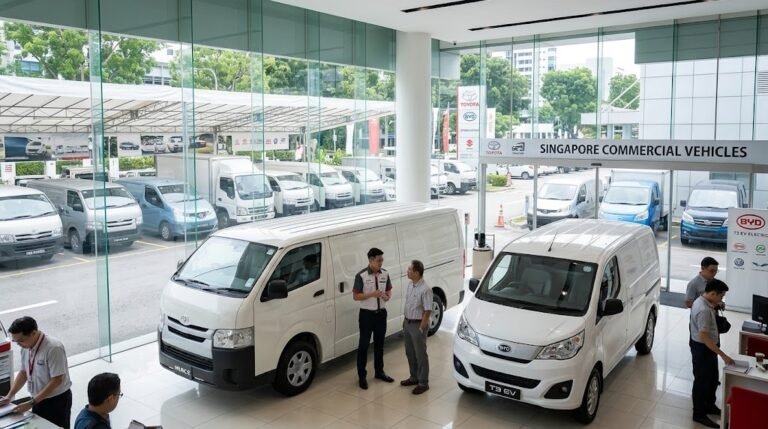
1. Vehicle price (OMV-based). This is what the dealer quotes — the vehicle itself, before COE and taxes. A standard-roof automatic Toyota Hiace van, for example, lists from roughly $52,900 to $55,000 depending on variant.
2. COE. Category C covers goods vehicles and buses above 3,500kg MLW, and all goods vehicles regardless of weight. As of September 2026, Category C premiums were running around $93,000. Unlike car categories, Category C COEs carry no PARF rebate when the vehicle is scrapped at the end of its life — you don’t get any of that money back.
3. Taxes and registration fees. Additional Registration Fee (ARF) is 5% of Open Market Value for most goods vehicles (higher graduated rates of 100–320% apply specifically to goods-cum-passenger vehicles). Add a $350 registration fee, a $28.34 processing fee, road tax, and — if your vehicle falls under the Commercial Vehicle Emissions Scheme window (1 April 2025 to 31 March 2027) — either an incentive of up to $15,000 or a surcharge of up to $20,000 depending on where it lands on the emissions scale.
4. Financing cost. If you’re not paying cash, the interest on a 5–7 year commercial vehicle loan compounds against a COE component that itself doesn’t depreciate the way a car’s does.
| Cost Layer | Typical Range (2026) | Notes |
|---|---|---|
| Vehicle price (light van, new) | $50,000–$60,000 | Before COE; varies by brand/spec |
| Category C COE | ~$90,000–$95,000 | No PARF rebate; 10-year validity |
| ARF | 5% of OMV | Higher for goods-cum-passenger |
| Registration + processing fees | ~$380 | Fixed |
| VPC (if applicable) | Case-by-case | Required for HGVs, large buses, trailers |
| CVES incentive/surcharge | -$15,000 to +$20,000 | Depends on emissions band, Apr 2025–Mar 2027 |
Step-by-Step: How the Purchase and Registration Process Works
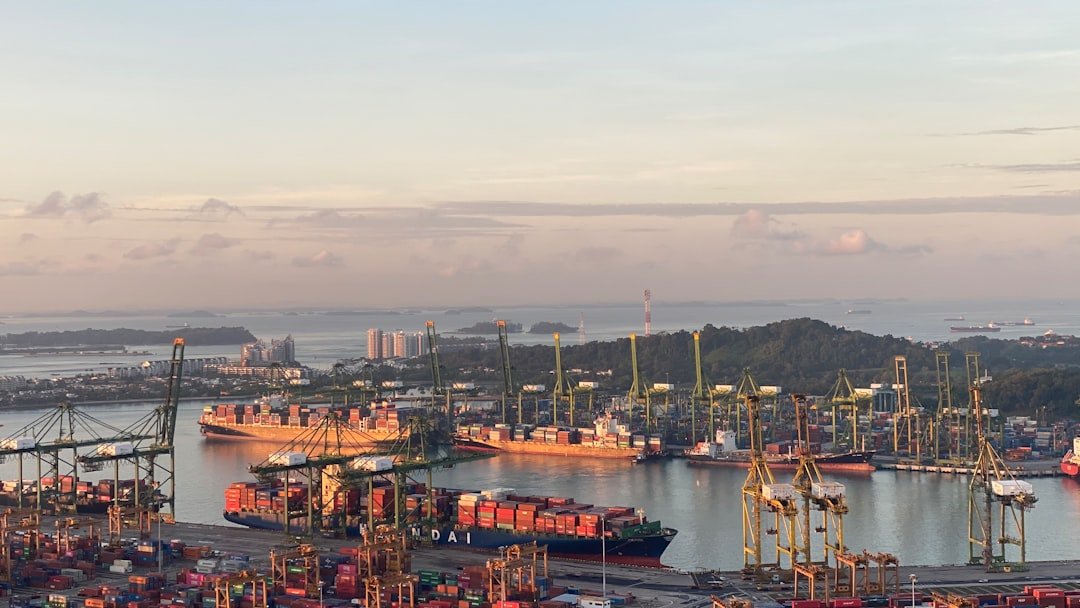
This is the actual LTA-documented sequence for importing and registering a goods vehicle — not the dealer’s marketing version of it.
- Confirm eligibility. The vehicle must meet exhaust emission standards (Euro 6, JPN2018, or JPN2023 depending on fuel type), noise limits, and safety specs before anything else happens.
- Gather manufacturer documents — proof of newness (or prior registration status for used imports), compliance certificates, WLTP-tested CO2/fuel consumption data, and full technical specs.
- Ship and clear customs. Your agent obtains an Inward Cargo Clearance Permit via TradeNet and pays 8% GST on the CIF value plus processing fees.
- Submit a Vehicle Approval Application through VITAS (Vehicle Inspection and Type Approval System) — $274.68 application fee.
- Pass the pre-registration inspection at an LTA-authorised inspection centre to get your Vehicle Approval Code (VAC).
- Bid for a COE in Category C. Bidding happens twice a month; a $10,000 fixed deposit is required to bid; COEs are valid for 3 months once issued, so your registration timeline is now on a clock.
- Get a Vehicle Parking Certificate, if your vehicle’s MLW exceeds 5,000kg, or it’s a large bus or trailer.
- Register the vehicle with LTA’s Vehicle Quota & Registration Division — application form R01, ID documents, the VAC approval letter, your temporary COE, proof of motor insurance, VPC (if needed), and the cargo clearance permit.
- Pay ARF, registration fee, processing fee, and road tax.
- Affix registration plates within 3 days of registration; light goods vehicles must also display the owner’s name, business address, registration number, and passenger capacity within 7 days.
COEs expire 3 months after issue. If your vehicle approval, inspection, or shipping runs long and you miss that window, you forfeit the COE and have to bid again — at whatever the next premium happens to be. Sequence your paperwork around the COE, not the other way round.
New vs Used: What Actually Changes
Buying used shifts the risk profile rather than removing cost. LTA caps used imports at 3 years old at the point of registration, and if the emissions test was done overseas, the vehicle has to land in Singapore within 3 months of that test — so a “great deal” on an aging import can quietly fail on the calendar before it fails on inspection.
The COE cost doesn’t disappear either: a used vehicle still needs a COE bid (or you’re buying one with COE time already run down, which shows up in the resale price). What you’re actually trading off between new and used is warranty coverage, remaining COE life, and unknown maintenance history against a lower upfront vehicle price.
Financing a Commercial Vehicle

Most SME fleet buyers finance rather than pay cash, and commercial vehicle loans in Singapore typically run 5 to 7 years, with the loan-to-value ratio set against the vehicle price plus COE. The mechanics matter more than the headline rate: because a chunk of what you’re financing is a depreciating COE with no scrap-value rebate in Category C, the effective cost of financing a commercial vehicle tends to run higher over the loan term than financing a private car of similar sticker price.
GST and Tax Treatment
This is where commercial vehicles genuinely differ from private cars, and it’s worth knowing before you buy rather than after. Singapore’s GST rules disallow input tax claims on “motor cars” — broadly, vehicles designed to carry 7 passengers or fewer that aren’t normally used to transport goods. Vans, lorries, and trucks used in the course of business fall outside that definition, so a GST-registered business can generally claim the GST paid on the vehicle purchase, subject to the usual input tax conditions. (Confirm your specific vehicle’s classification and your claim with your accountant or IRAS directly, since misclassifying a goods-cum-passenger vehicle is a common error.)
Don’t assume every “commercial-looking” vehicle qualifies. A goods-cum-passenger vehicle configured mostly for carrying people can be reclassified closer to a passenger car for tax purposes. If GST recovery is part of your buying decision, get the vehicle’s exact classification confirmed before you sign, not after.
Common Mistakes First-Time Fleet Buyers Make
- Budgeting the vehicle price and forgetting the COE has no rebate. Category C COE cost is sunk the moment your vehicle is scrapped — there’s no PARF cheque waiting for you the way there is for most car categories.
- Not checking VPC requirements until after ordering. If you’re buying anything with an MLW over 5,000kg, or a large bus or trailer, get the VPC question answered before you commit to the purchase, not during registration.
- Missing the COE’s 3-month clock. Between vehicle approval, inspection, and shipping delays, it’s easy to let a bid COE lapse.
- Assuming GST is automatically claimable on any vehicle that looks like it’s for business. Get the classification confirmed.
- Ignoring CVES banding. The same vehicle can carry a $15,000 incentive or a $20,000 surcharge depending on which emissions band it falls into — this can swing your effective price by $35,000 between two otherwise similar trucks.
FAQ
How much does a commercial vehicle cost in Singapore?
A light commercial van typically starts around $50,000–$60,000 before COE. Add a Category C COE (around $90,000–$95,000 as of September 2026), ARF at 5% of OMV, and registration fees, and total upfront cost for a new light van commonly lands well above $140,000.
Do I need a special licence to drive a commercial vehicle in Singapore?
Yes, depending on the vehicle’s weight class — Class 3, 4, or 5 licences apply to different goods vehicle categories.
Can I claim GST on a commercial vehicle purchase?
Generally yes, for vans, lorries, and trucks used in the course of a GST-registered business — unlike private passenger cars, which are typically disallowed. Confirm your specific vehicle’s classification with your accountant.
What is a Vehicle Parking Certificate and do I need one?
A VPC is required before registering heavy goods vehicles (MLW over 5,000kg), large buses, and trailers. It confirms you have adequate parking arrangements. Check this before committing to a vehicle purchase, not after. Update (September 2026): LTA launched a parking lodgement service on 15 September 2026 that lets owners of these heavier vehicles register overnight parking at private industrial, work-site or commercial premises (with the site owner’s consent) via OneMotoring, as an additional option alongside the standard VPC route. It widens where you can satisfy the parking requirement — it does not remove the VPC requirement itself for registration.
Is it cheaper to lease or buy a commercial vehicle?
It depends on your cash flow, how long you’ll run the vehicle, and whether you want the asset on your balance sheet.
How long does COE for a goods vehicle last?
Category C COEs run for 10 years from registration, with no PARF rebate on scrapping — unlike most passenger car categories.
Can I register a used commercial vehicle imported from overseas?
Yes, but LTA caps used imports at 3 years old at registration, and emissions testing timelines are strict.
Author: Keith Kwai, editor and publisher of SGFleetGuide, with 25 years experience in B2B and B2C companies. More about the author.
Last updated: 11 September 2026
Sources: LTA — Importation and Registration of a Goods Vehicle | LTA — Certificate of Entitlement | LTA/data.gov.sg — COE Bidding Results | IRAS — GST on Motor Vehicles

2 Comments