Common Commercial Vehicle Repairs in Singapore and What They Typically Cost
The repairs that show up most often on Singapore commercial vehicles are brakes, suspension and leaf springs, clutch and transmission wear, tyres, aircon faults, and electrical or battery issues — roughly in that order for delivery vans and lorries doing stop-start city work. Costs vary widely by workshop, vehicle weight class and parts grade, so treat every figure below as a planning guide, not a quote, and always get an itemised quote before work starts.
Key Takeaways
- Brakes wear fastest on stop-start delivery routes — pad and disc work is typically the most frequent repair on a Singapore delivery van or lorry.
- Suspension and leaf spring wear tracks load, not just mileage — a lorry run near its rated payload sees springs and bushings fail earlier than a lightly-loaded one on the same route.
- Clutch and transmission repairs are among the highest single-visit costs — commercial clutch kits are heavier-duty than passenger car parts, and labour reflects that.
- Reactive repairs almost always cost more than preventive ones — a part that fails on the road adds towing, downtime and sometimes secondary damage.
- Usage pattern determines what breaks first — stop-start routes chew through brakes and clutches; highway hauling stresses tyres, suspension and cooling systems instead.
- A per-vehicle annual repair budget is a planning tool, not a prediction — build it from your own fleet’s history where you have it, and conservative industry ranges where you don’t.
Table of Contents
- The Most Frequent Repair Categories
- Brakes: Pads, Discs and Drums
- Suspension and Leaf Springs
- Clutch and Transmission
- Tyres
- Aircon
- Electrical and Battery
- How Usage Pattern Changes Wear
- Preventive vs Reactive: The Cost Tradeoff
- Building a Repair Cost Budget Line Per Vehicle
- FAQ
The Most Frequent Repair Categories
Ask any workshop that services delivery vans and lorries what comes through the bay most often, and the answer is fairly consistent: brakes first, then suspension and leaf springs, clutch and transmission, tyres, aircon, and electrical or battery faults. The order shifts with route type, but this holds well enough across Singapore’s commercial fleet to be useful. All six categories are driven mainly by usage, not age — a five-year-old van on gentle runs can outlast a two-year-old doing aggressive stop-start work on the same components.
Whether these repairs are handled by an in-house team or an outsourced workshop also shapes the number — see our guide on choosing between in-house and outsourced MRO for that separate decision. One note before the specifics: Singapore has no published, standardised rate card for commercial vehicle repairs. The ranges below are drawn from published workshop pricing, parts marketplaces and forums, cross-checked against general passenger and light commercial vehicle data — not one authoritative source, because none exists. Where a figure is an estimate rather than something directly sourced, the text says so.
Brakes: Pads, Discs and Drums
Brake work tops the list for urban delivery vehicles because every stop at a loading bay or set of lights is a brake application. A van making 40 to 60 stops a day wears its pads faster than a private car covering the same distance on open roads.
Published Singapore pricing for passenger and light commercial vehicles puts front or back brake pad replacement, with labour, from around $100 upward for Asian makes and $200 upward for Continental makes; fuller brake repair (pads plus discs, or a worn caliper) from around $200 to $300 upward respectively. These figures are estimates, not quotes. Heavier vans and lorries typically sit above these figures given larger, higher-rated parts — confirm with your workshop. For lorries on drum brakes, resurfacing or shoe replacement is priced separately, so ask for an itemised job.
Brake jobs are easy to over-quote because most fleet operators can’t visually judge pad wear. Ask for the worn part back, or ask to see the wear measurement, before authorising a full brake job.
Suspension and Leaf Springs

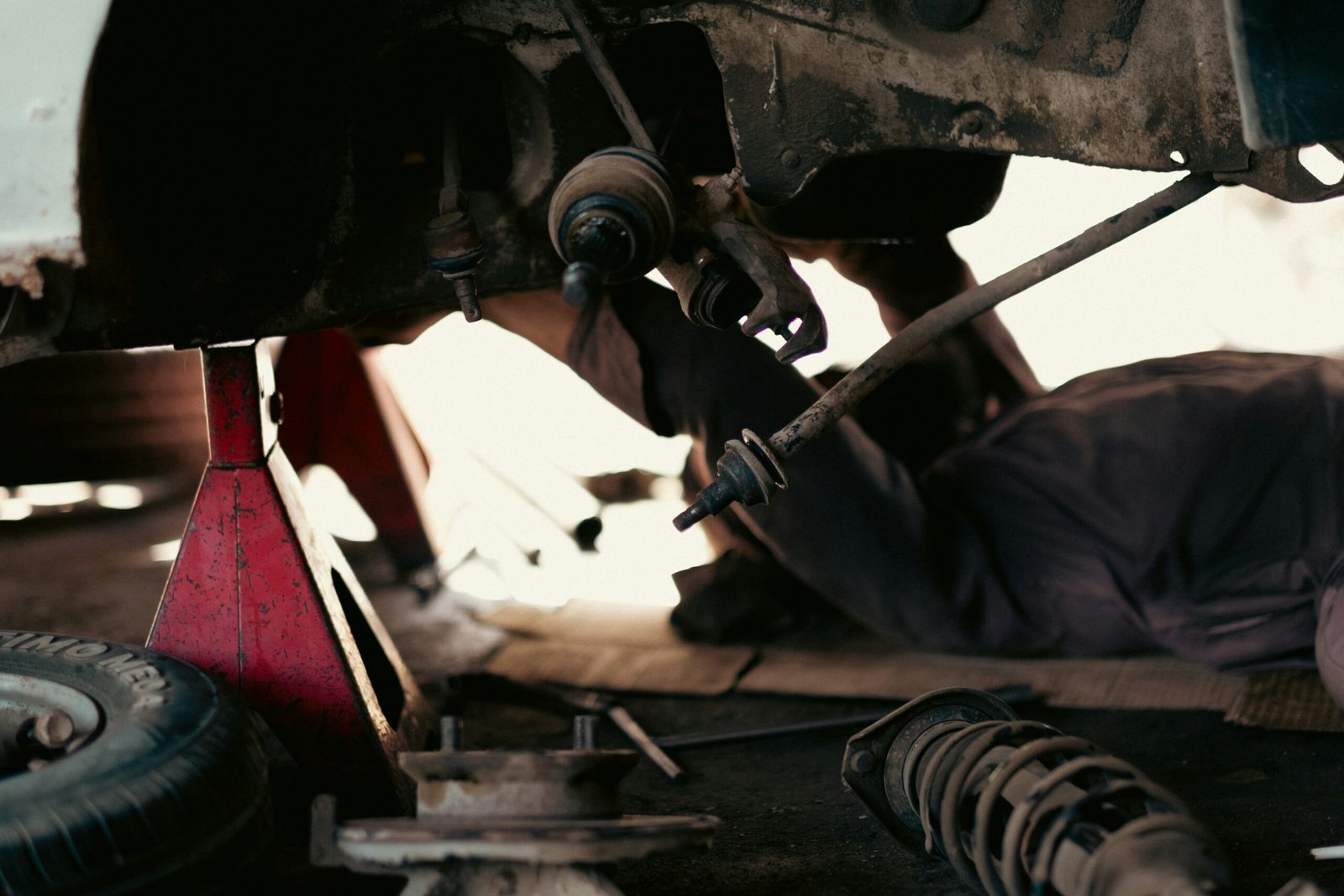
Lorries and heavier vans commonly run leaf spring rear suspension rather than car-style coil springs, since leaf springs handle variable, heavy loads better. The tradeoff: springs, shackles, bushings and U-bolts wear by how close to rated payload the vehicle runs, not purely age or mileage.
Published pricing for passenger and light commercial vehicles shows front or back suspension repair from roughly $500 upward for Asian makes and $800 upward for Continental makes, with damper replacement including labour from about $500 to $900-plus. These figures are estimates, not quotes. A full leaf spring pack on a lorry typically costs more, given part size and labour, but no published commercial figure exists — get a quote for your configuration. A single leaf, shackle or bushing is usually cheaper and often all that’s needed. Failure is rarely sudden — it usually shows first as uneven ride height or clunking over bumps, and catching it there beats a towing bill.
Clutch and Transmission
Manual transmission vehicles, still common in Singapore’s lorry fleet, take a harder toll on the clutch than passenger cars — stop-start traffic engages and disengages it constantly, and loaded hill-starts add more strain. A clutch kit (plate, pressure plate, often the release bearing) is one of the costlier single-visit repairs, since the gearbox has to come out.
Published Singapore transmission servicing for passenger and light commercial vehicles runs from roughly $98 upward on Asian makes to $128 upward on Continental makes, with full gearbox replacement from around $1,200 to $1,900. These figures are estimates, not quotes. A clutch kit on a lorry or van commonly costs comparable to or more than these figures, given heavier-duty parts and longer labour — confirm with your workshop. Early symptoms — slipping under load, a spongy biting point, unusual pedal noise — are worth acting on immediately, given the cost at stake.
Tyres
Tyres are a recurring, predictable cost, easier to budget for than brakes or clutches — though the range is wide since sizing varies between a small van and a heavy lorry. Passenger and light commercial tyre repair or replacement has been quoted anywhere from roughly $80 to $500 per tyre, depending on size, brand and whether it’s a repair or full replacement. Lorry tyres in common sizes (700R16 and larger) are sold through specialist dealers at prices that scale up from there. These figures are estimates, not quotes. Heavy lorry tyres commonly cost several times a passenger car tyre given size and load rating — check with a supplier for current pricing. Steering-axle tyres typically wear faster and deserve a shorter inspection interval.
Aircon
Aircon problems are less safety-critical than brakes or tyres, but a driver doing an eight-hour shift with no cold air in Singapore’s climate is a productivity problem, not just a comfort one. Costs range enormously depending on the fault: a gas top-up sits at the low end, a compressor replacement at the high end.
Published pricing shows aircon diagnostics around $78 to $80, a gas top-up around $30, and a system flush around $80. Compressor replacement is a different order of magnitude — quoted from roughly $500 upward — and a full repair has been quoted at over $1,300 in some cases. These figures are estimates, not quotes. Commercial aircon systems are broadly comparable to passenger systems in complexity, so these figures are a reasonable reference point.
A “no cold air” complaint is often diagnosed as a compressor fault when the real issue is a refrigerant leak or a blown relay fuse. Insist on a proper diagnostic before authorising compressor replacement.
Electrical and Battery
Electrical faults are hard to generalise — the category covers everything from a flat battery to a wiring fault that takes hours to trace. Battery replacement is the most common cost; batteries degrade faster in vehicles doing short delivery runs, which don’t give the alternator enough run time to fully recharge.
Published battery replacement pricing runs from roughly $90 to $260 for standard batteries on Asian makes, and $280 to $360 for Continental makes, with AGM and EFB batteries generally priced above standard flooded types. These figures are estimates, not quotes. Lorries and larger vans sometimes need higher-capacity or dual-battery setups, particularly with a tail lift or refrigeration unit drawing extra power — confirm the specification with your workshop. Beyond batteries, alternator and starter faults, and wiring damage from wear or rodents, are the other issues that recur on older vehicles, harder to price generally.
How Usage Pattern Changes Wear
The biggest driver of which repairs show up first isn’t a vehicle’s age or mileage — it’s how that mileage was accumulated. A stop-start delivery route — frequent idling, tight turns, short bursts of acceleration and braking — is hard on brakes, clutches and engine mounts, with more heat cycling than a vehicle cruising at steady speed. Highway hauling — longer runs, often near full payload — is easier on brakes and clutches but harder on tyres, suspension and cooling: sustained speed generates more tyre heat, and a loaded vehicle stresses leaf springs continuously rather than intermittently.
A one-size-fits-all budget across a mixed fleet is a mistake — track repair categories by route type. For servicing intervals alongside this, see our commercial vehicle maintenance schedule guide.
Preventive vs Reactive: The Cost Tradeoff
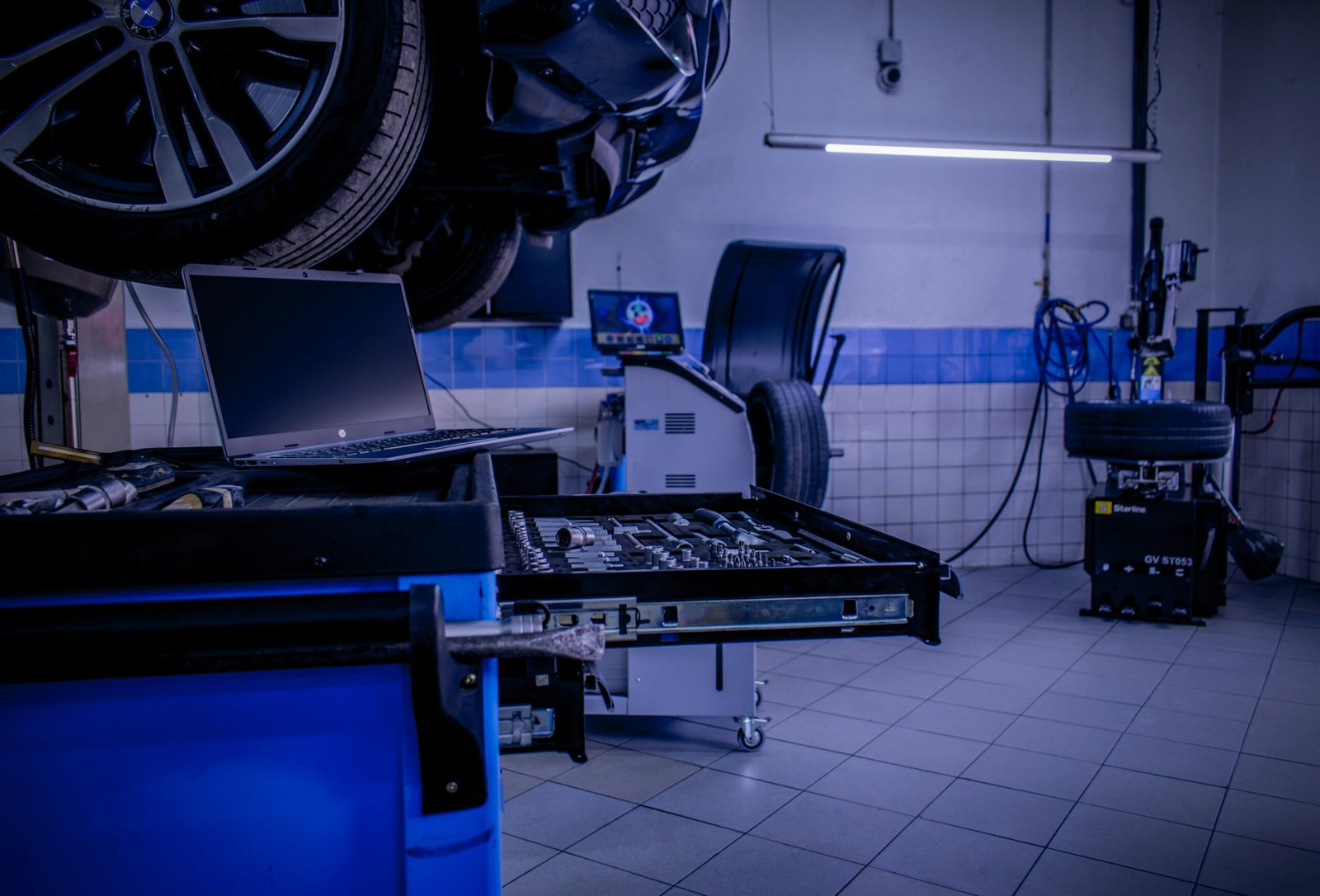
Every category above has a preventive version and a reactive version, and the cost gap is usually significant. Preventive maintenance catches wear before failure — pads replaced at the recommended threshold, a bushing replaced before the spring is damaged, aircon gas topped up before a starved compressor burns out. Reactive maintenance waits until something fails, and a snapped leaf spring can damage the shock absorber on its way to failing, turning one repair into several.
The indirect costs are usually bigger: a breakdown needs towing, the delivery is disrupted, and the vehicle sits off the road for as long as repair and parts take. A scheduled pad change is often done overnight; a breakdown on the AYE at peak hours is a different scale of disruption. That said, not every preventive measure pays for itself — replacing parts too early wastes money too, so match replacement timing to actual wear.
The true cost of a reactive repair is rarely just the invoice. Factor in towing, a missed delivery slot, and any temporary vehicle hire, and a “cheap” reactive fix can cost more overall than the preventive maintenance that would have avoided it.
Building a Repair Cost Budget Line Per Vehicle
Most SME fleet operators don’t have enough repair volume to build a statistically reliable cost model alone — five vans don’t generate enough events a year to smooth a quiet year against an expensive one. That’s fine; a useful budget line needs to be directionally right, not precise from day one.
Start with your own workshop invoices for the past one to two years, if you have them. Total up everything that isn’t routine servicing (a separate line), and divide by vehicles and years covered — a rough average specific to your fleet, more useful than any generic figure. Without enough history, build an estimate from the categories above, weighted by usage — more on brakes and clutch for a stop-start fleet, more on tyres and suspension for a highway-hauling one. Add a contingency for the years an unusually expensive repair lands outside the normal pattern. This is an estimate. Roughly 15% to 25% above the average is a common budgeting convention rather than a Singapore-specific benchmark; adjust as data accumulates.
Segment by vehicle age band rather than one fleet-wide number — a vehicle in its first two to three years typically carries a lower repair line than one past five to seven years, where brakes, suspension, clutch and battery are more likely to need attention. Reviewing this budget annually against actual spend turns it into a useful tool, and eventually tells you when a vehicle has crossed from worth repairing to worth replacing.
FAQ
What is the most common repair on Singapore delivery vans and lorries?
Brake work — pad, disc or drum-related — is generally the most frequent, especially on stop-start urban delivery routes where brakes are applied far more often per kilometre than on highway driving.
Why do commercial vehicle repair quotes vary so much between workshops?
Pricing depends on parts grade, labour rates, vehicle weight class, and whether the workshop specialises in commercial vehicles. There’s no standardised rate card in Singapore, so a second or third quote is worth the time.
How does stop-start driving affect repair costs compared to highway driving?
Stop-start driving accelerates wear on brakes, clutches and engine mounts. Highway hauling accelerates wear on tyres, suspension and cooling systems instead, due to sustained speed and often higher payload.
Should I repair an older commercial vehicle or replace it?
It depends on the vehicle’s accumulated repair cost trend, remaining COE/PARF value, and whether repair frequency is climbing year over year. A tracked per-vehicle budget line gives you the evidence to decide.
How often should leaf springs be inspected on a lorry?
There’s no universal interval, since wear depends on payload and route, but springs, bushings, shackles and U-bolts are worth a visual check at every scheduled service, and sooner if the vehicle develops uneven ride height or new clunking.
Where can I find reliable cost estimates for a specific repair?
Get itemised quotes from two or three workshops, ask what parts grade is quoted, and keep your own repair records over time — a year or two of your own history beats any general industry range, including the ones here.
Author: Keith Kwai, editor and publisher of SGFleetGuide, with 25 years experience in B2B and B2C companies. More about the author.
Last updated: 11 September 2026
Sources: Motorist Singapore — Average Cost of Car Repairs and Part Replacements | SingSaver — How Much Are Tyres in Singapore? | JW Motoring — Car Battery Replacement Cost in Singapore | Edwin Garage Singapore — Car Aircon Servicing Cost | Reliable Car Servicing — Clutch Repair Singapore | LTA OneMotoring — Goods Vehicle and Engineering Plant Classification