In-House Workshop vs Outsourced MRO for Commercial Fleets in Singapore
For most Singapore SME fleets, an in-house workshop only starts making financial sense somewhere between 15 and 40 vehicles, depending on vehicle type and how much repair work — not just routine servicing — you can keep inside. Below that, outsourcing under a service-level agreement is almost always cheaper once technician salaries, equipment and licensing overhead are counted. Most fleets in between land on a hybrid model: routine servicing in-house, major repairs and bodywork sent out.
Key Takeaways
- There is no single “LTA workshop licence” — running a workshop means clearing separate approvals from URA/JTC, NEA, SCDF and MOM, not one licence from LTA.
- Break-even fleet size is a range, not a number — light vans typically need a larger fleet to justify an in-house bay than heavy vehicles, since a single outsourced heavy-vehicle repair or tow costs so much more.
- Outsourced workshops price on labour rate plus parts markup, and a written SLA on turnaround, loan vehicles and parts sourcing matters more to your uptime than the headline hourly rate.
- Hybrid models dominate the mid-market — routine servicing and tyres in-house; bodywork, major engine work and specialist diagnostics sent to a third party.
- LTA periodic inspection happens only at an authorised inspection centre — your own workshop, however good, cannot self-certify roadworthiness.
- Warranty status shapes the decision — vehicles still under manufacturer or dealer warranty have real reasons to stay close to the authorised network, even where cost arithmetic points elsewhere.
Table of Contents
- Where In-House Workshops Start Paying Off
- What an In-House Workshop Actually Costs
- Licensing, Space and Zoning Realities
- Outsourcing: Real Costs and How SLAs Work
- The Hybrid Model: Routine In-House, Major Repairs Out
- LTA Inspections, Warranty and How They Shape the Decision
- A Decision Framework for Fleet Managers
- FAQ
Where In-House Workshops Start Paying Off
Every fleet manager who has sat through a workshop quote has wondered whether it’s cheaper to just hire a mechanic. Usually not, until the fleet is bigger than you think — because the constraint isn’t the hourly labour rate, it’s fixed cost. A bay, a lift, a diagnostic scanner and a qualified technician cost roughly the same whether you’re servicing 5 vehicles a month or 50, and that cost has to be spread across enough vehicles before it beats what an outsourced shop charges.
As a rough guide, many Singapore SME fleets find the arithmetic starts to work in the 15 to 40 vehicle range — lower for heavy vehicles, where a single outsourced repair or towing callout can run into the thousands, higher for light vans, where outsourced routine servicing is cheap enough that a bay takes longer to pay for itself. Treat this as a directional benchmark rather than a rule — break-even depends heavily on vehicle type, duty cycle and local rental rates, so run your own numbers using the cost drivers below.
Two things move that threshold: duty cycle (two shifts a day fills a bay faster than a fleet parked most evenings) and repair mix (a shop that also handles tyres, batteries and minor electrical faults pays off with a smaller fleet than one limited to oil changes and filters, since those add billable hours without adding headcount).
What an In-House Workshop Actually Costs
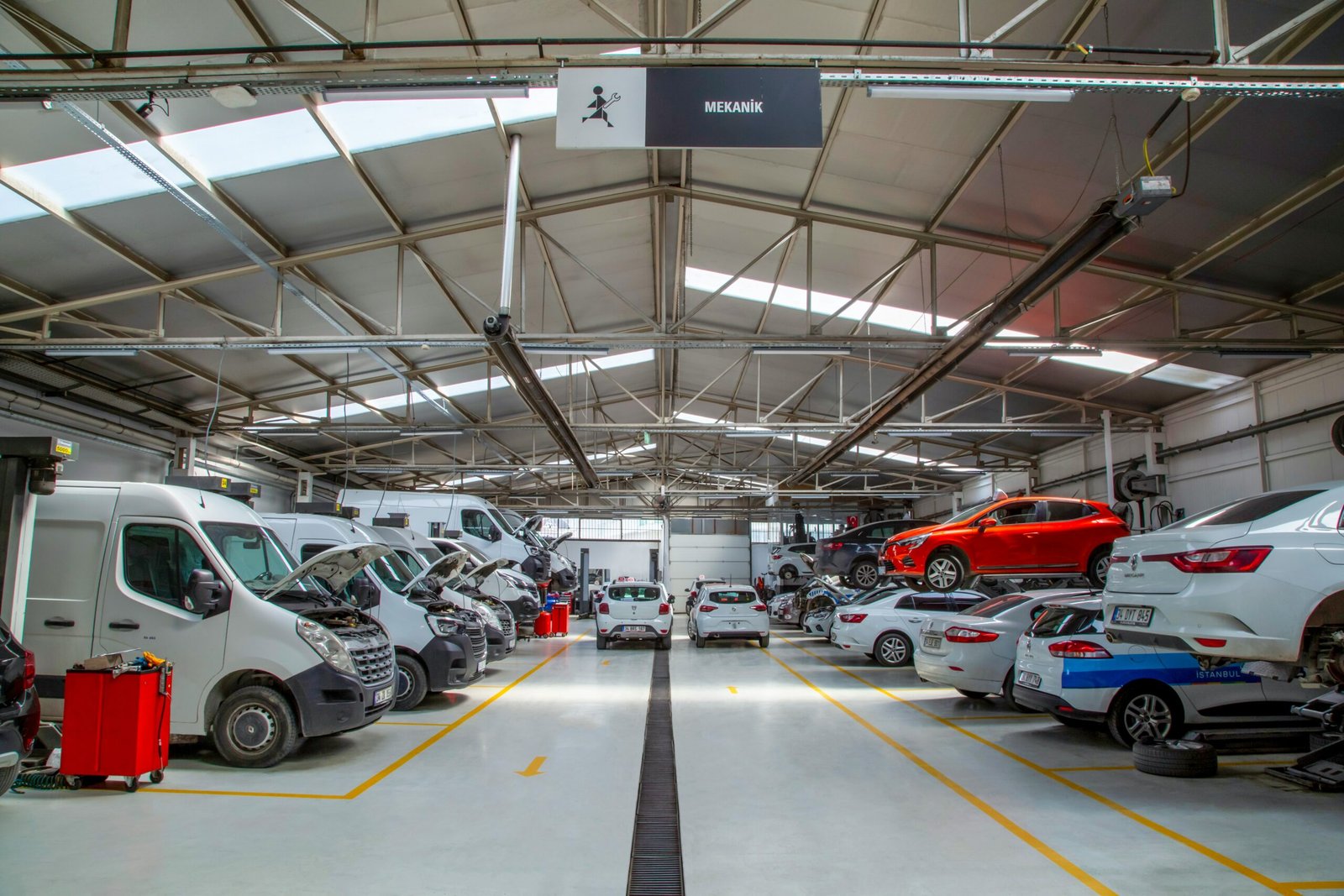
A minimal two-bay setup for routine commercial vehicle servicing carries roughly these annual costs:
| Cost Item | Typical Annual Cost (SGD) |
|---|---|
| 2 technicians, loaded (salary + CPF + work permit levy where applicable) | ~$70,000–$90,000 |
| Industrial unit rental (B1/B2, ~1,500–2,000 sq ft) | ~$55,000–$70,000 |
| Equipment fit-out, amortised over 5 years (hoists, diagnostic scanner, tyre changer, compressor) | ~$20,000–$30,000 |
| Consumables, small tools, insurance, waste disposal contracts | ~$10,000–$18,000 |
| Total estimated fixed cost | ~$155,000–$208,000 |
Technician wages are the line item fleet managers most underestimate. Loaded cost — salary plus CPF plus, for work pass holders, the monthly foreign worker levy — runs well above the take-home figure quoted at interview. Exact wage bands vary by experience, certification and work pass type, so confirm against live job listings before you budget rather than trusting a single number. Fit-out for a basic-to-mid workshop starts around $80,000 and climbs past $150,000 with EV-capable diagnostics, an alignment rig or a spray booth.
Factor in technician turnover. Automotive technicians are in short supply in Singapore, and losing one mid-contract means recruitment cost, a training gap, and a bay sitting idle while fixed costs keep running. Build a retention buffer into your break-even math, not just a hiring one.
Licensing, Space and Zoning Realities
A common misconception: opening a workshop means applying for “an LTA licence.” It doesn’t. You’re clearing separate approvals from different agencies, and zoning and environmental steps are usually the slower part, not the paperwork.
At minimum, expect: URA/JTC zoning, since repair work is restricted to B1/B2 industrial premises, with change-of-use approval needed if the unit wasn’t previously automotive; NEA clearance for trade effluent and a licensed waste collector for used oil, solvents and batteries; SCDF fire safety compliance and a flammable materials licence past a small storage threshold; and MOM factory notification under the Workplace Safety and Health Act. Fleets chasing government or corporate contracts typically also need bizSAFE. Exact thresholds depend on site, storage volumes and activities, so verify with URA, NEA and SCDF before committing to a lease — don’t assume last year’s rules still hold.
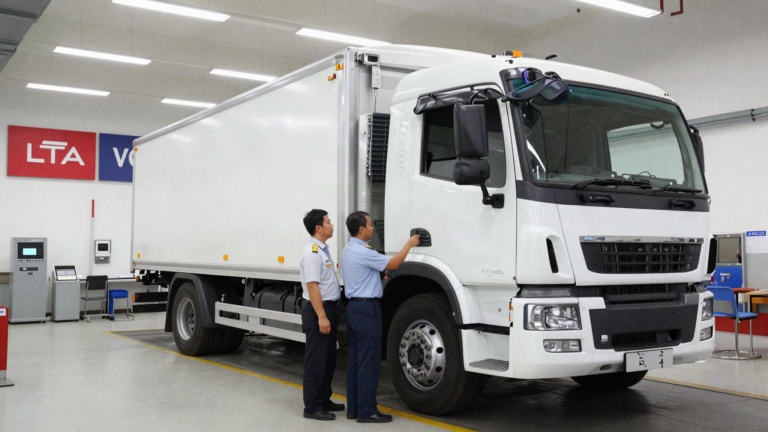
LTA’s role here is narrower than most assume: it doesn’t licence repair workshops, only a small number of specialist Vehicle Inspection Centres (VICOM, STA and JIC currently) that run the periodic roadworthiness inspections every registered vehicle needs. Your own workshop, however capable, can’t self-certify roadworthiness — vehicles still go to an authorised centre on schedule. Plan that into your calendar; see our guide to LTA vehicle inspection for commercial vehicles for the detail.
Outsourcing: Real Costs and How SLAs Work
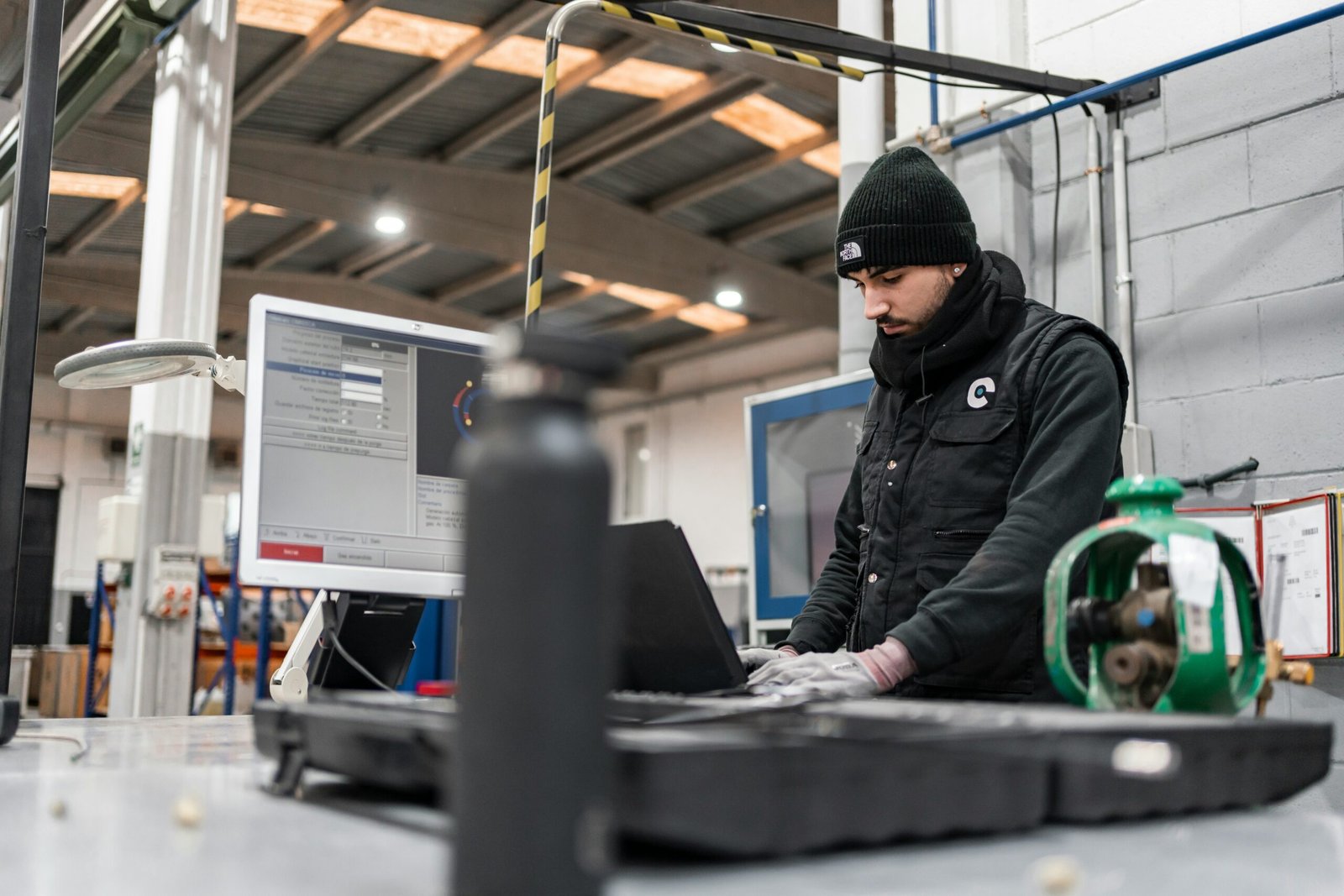
Outsourcing shifts cost from fixed to variable — you pay per job, not per month, which is why it wins for smaller fleets. Third-party workshops typically price on a labour rate per hour plus a parts markup, scaling to vehicle class: a light van costs less per hour than a heavy goods vehicle or a bodywork job.
What determines whether outsourcing actually works isn’t the rate card — it’s the SLA behind it. A relationship without one defaults to first-come-first-served queueing, fine until a vehicle is off the road during a delivery peak. Terms worth negotiating: guaranteed turnaround by job type, priority slotting over walk-in customers, a loan vehicle for extended repairs, sign-off rights on parts sourcing, and a rate fixed for the contract period. A fleet sending a steady stream of vehicles to one or two partners has real negotiating power for these terms — treat it as a vendor contract renegotiated annually, not a one-off transaction each time something breaks.
The Hybrid Model: Routine In-House, Major Repairs Out
Most fleets that outgrow pure outsourcing land on a hybrid model, matching each type of work to the cheapest way of doing it.
Routine, high-frequency work — oil and filter changes, brake pads, tyre rotation, battery checks, and prepping a vehicle for its LTA inspection appointment — benefits from coming in-house once volume supports it. It’s predictable, needs no rare equipment, and lets you schedule around your own operations rather than a workshop’s booking slot. A disciplined internal schedule here also keeps your fleet aligned with LTA expectations between formal inspections — see our commercial vehicle maintenance schedule for Singapore for the typical cadence.
Major repairs, engine and transmission work, bodywork and accident repair, and anything needing specialist or manufacturer-specific tooling almost always make more sense outsourced, even for fleets large enough to run a full workshop. A spray-painting bay or engine-rebuild capability costs too much, and gets used too rarely, for the fixed-cost math to close.
The practical dividing line: under two hours, no part you don’t stock, and your technician has done it before — keep it in-house. Needs a specialist, an ordered-in part, or half a day on the lift — send it out.
LTA Inspections, Warranty and How They Shape the Decision
Two realities sit underneath this decision. First, inspection frequency in Singapore steps up with vehicle age and is generally more frequent for commercial vehicles than private cars, reflecting heavier duty cycles. LTA has revised the exact intervals by age and fuel type over time, so confirm your current schedule on LTA’s OneMotoring inspection page rather than working from a remembered interval — a lapsed inspection risks a stop on the vehicle’s use. Whichever model you run, vehicles still pass through an authorised inspection centre on schedule — an in-house workshop cuts unscheduled repair exposure before that appointment, but doesn’t replace it.
Second, warranty status is a real constraint on newer vehicles. Singapore’s consumer protection framework generally doesn’t let a manufacturer void a warranty outright just for servicing outside the authorised network, provided the work is competent and parts equivalent — but that’s a general principle, not a guarantee, and claims aren’t frictionless when the paper trail is thin. It’s a general principle, not a guarantee that applies to every contract — check your own warranty terms and keep service records regardless. Extended warranties often carry stricter terms requiring dealer-network servicing to stay valid — read the contract before routing a newer vehicle elsewhere, and keep warrantied vehicles close to the authorised network until cover lapses.
Build LTA inspection dates into your maintenance model. A vehicle due for inspection next month is a poor candidate for a major in-house job that might drag on — send it to an outsourced specialist that can turn it around in time, and keep your bay free for vehicles with more schedule slack.
A Decision Framework for Fleet Managers
Work through these questions in order rather than chasing a single “right answer”:
- How many vehicles, and what type? Under roughly 15, outsourcing almost always wins. Above roughly 40, model an in-house bay seriously. In between, check your numbers against 12 months of actual outsourced spend.
- What’s your repair mix? Mostly routine servicing and tyres — in-house pays off faster. Mostly major repairs and bodywork — outsourcing stays attractive even at larger fleet sizes.
- What’s your downtime cost? If an idle vehicle costs real revenue, weight uptime higher than cost-per-service — that favours in-house or a tightly-SLA’d partner.
- Can you clear the licensing? No suitable B1/B2 space nearby, or no appetite for NEA and SCDF compliance, can settle the decision regardless of the cost math.
- What’s your warranty exposure? A fleet turning over vehicles every 3–4 years, mostly under warranty, gains less from in-house than one running vehicles 8–10 years.
- Can you hire and keep technicians? An empty bay because you can’t staff it costs the full fixed cost with none of the benefit.
Most fleet managers land somewhere in the middle: a small in-house capability for routine, high-frequency work, and a negotiated outsourced relationship — with a real SLA, not a handshake — for everything else. For most Singapore SME fleet sizes, that’s the model the arithmetic supports.
FAQ
Is there a specific LTA licence required to open a vehicle repair workshop in Singapore?
No. You’ll need URA/JTC zoning, NEA clearance for waste and spray-painting, SCDF fire safety approval, and MOM workplace safety notification instead. LTA only authorises the Vehicle Inspection Centres that run periodic roadworthiness inspections.
At what fleet size does an in-house workshop become worth it?
Directionally, the 15 to 40 vehicle range — heavy fleets toward the lower end, light van fleets toward the higher end. Model it against your own 12 months of outsourced spend rather than a fixed number.
Can I skip sending vehicles to an outsourced workshop if I build my own?
You can bring most routine work in-house, but not LTA’s periodic inspection, which only happens at an authorised inspection centre. Most fleets also keep outsourcing major repairs and bodywork, since the equipment cost for low-frequency jobs rarely pays off.
Does servicing at a non-dealer workshop void the manufacturer’s warranty?
Generally no, provided the work is competent and parts equivalent — but extended warranties can carry stricter terms. Check your contract and keep thorough service records regardless.
What should go into an outsourced workshop’s SLA?
Guaranteed turnaround by job type, priority slotting over walk-in customers, a loan vehicle for extended repairs, sign-off rights on parts sourcing, and a rate locked for the contract period.
What’s the biggest hidden cost of an in-house workshop?
Technician turnover. An empty bay while you recruit and train a replacement still carries full rent and overhead with none of the benefit — budget a retention buffer, not just a hiring cost.
Does a larger fleet get better outsourced rates?
Often yes, informally — a steady stream of vehicles gives a workshop reason to offer terms a walk-in customer never gets. Treat it as an annual vendor negotiation, not one-off transactions.
Author: Keith Kwai, editor and publisher of SGFleetGuide, with 25 years experience in B2B and B2C companies. More about the author.
Last updated: 11 September 2026
Sources: LTA OneMotoring — LTA-Authorised Vehicle Inspection Centres | LTA OneMotoring — Vehicle Inspection | K-Tech Auto Solution — How to Start a Car Workshop in Singapore | SGAI Studio — Starting a Car Workshop in Singapore 2026: Licences, Cost, Profit | JobStreet — Automotive Mechanic Salary in Singapore