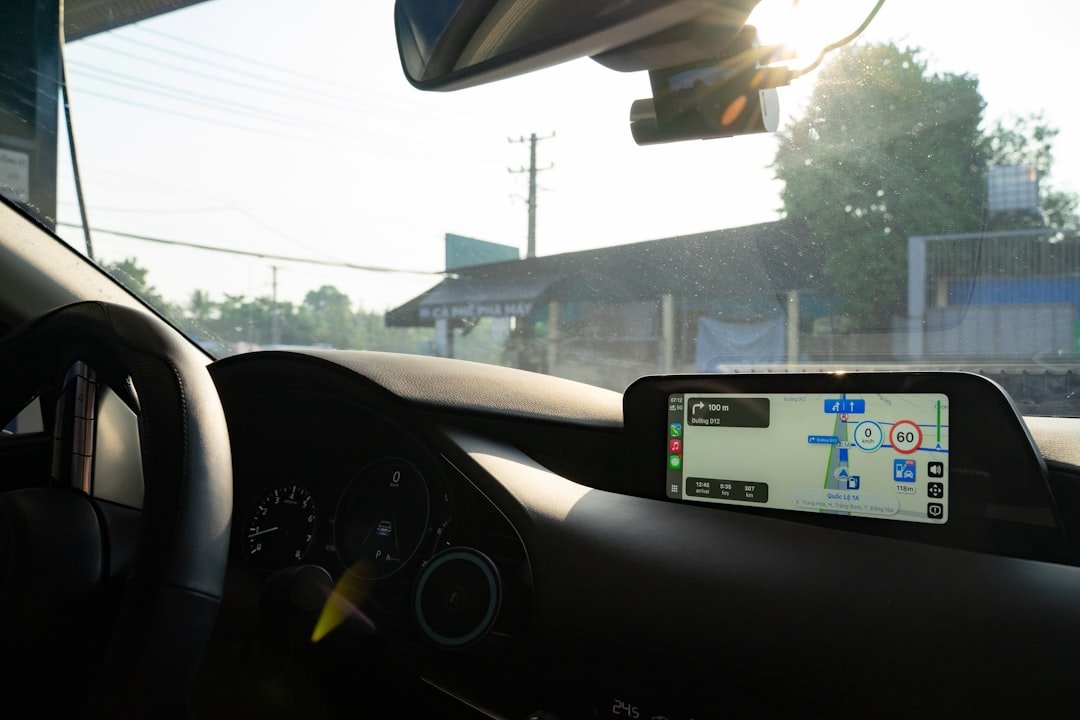
Fleet Management and Telematics for Commercial Vehicles in Singapore
Fleet telematics means GPS tracking, dashcams, fuel and driver-behaviour data layered onto commercial vehicles — sitting next to two regulatory changes fleets can’t ignore. LTA’s satellite-based ERP 2.0 On-Board Unit is being fitted fleet-wide ahead of a 1 January 2027 mandatory date, and heavier lorries face a phased speed-limiter rollout capping them at 60km/h. Add any tracking or camera system to a vehicle your drivers use, and PDPA notification and consent obligations follow — a compliance step most SMEs skip until someone asks.
Key Takeaways
- ERP 2.0’s OBU is being installed fleet-wide ahead of a mandatory 1 January 2027 date — a satellite-based positioning device, not a telematics product, but it changes the compliance backdrop every fleet operates against.
- Speed-limiting devices are being phased in for lorries down to 3,501kg MLW, not just the heaviest trucks — check where your vehicles sit against the rollout dates.
- Tracking your own drivers still triggers PDPA obligations — GPS and dashcam data are personal data the moment they identify a driver, meaning notification at minimum and usually consent.
- Fleet telematics covers more than GPS dots on a map — fuel monitoring, behaviour scoring, maintenance alerts, and route data are usually bundled into one platform.
- A verified telematics-linked insurance discount isn’t advertised market-wide in Singapore commercial motor insurance — ask your broker directly rather than assuming a number.
- Vendor selection matters more than feature lists — data ownership, export rights, and hardware lock-in are the questions that bite later, not the ones on the sales page.
Table of Contents
- What Fleet Telematics Actually Covers
- GPS Tracking and LTA’s ERP 2.0 Rollout
- PDPA, Consent, and Monitoring Your Drivers
- LTA Speed-Limiting Device Rules for Heavy Vehicles
- Fuel Monitoring and Theft Prevention
- Driver Behaviour Scoring and Insurance
- Choosing a Telematics Vendor
- Cost and ROI for an SME Fleet
- FAQ
What Fleet Telematics Actually Covers
“Telematics” gets used loosely, so it’s worth being specific about what it bundles for a small commercial fleet. At the core, it’s a GPS unit or app in each vehicle reporting position, speed, and idle time to a dashboard. Everything else builds on that: dashcams (forward-facing, driver-facing, or both) that record continuously or trigger on hard braking; fuel sensors or fuel-card integrations flagging unusual consumption; engine diagnostics surfacing maintenance codes before a breakdown; and driver-behaviour scoring turning harsh braking, speeding, and cornering into a number you can act on.
None of this is new technology — what’s changed is that it’s now cheap and cloud-native enough that a five-van SME can run the same category of system a 200-truck operator uses, just at smaller scale. The relevant question for a Singapore fleet isn’t whether telematics works, it’s which pieces are worth paying for given your fleet size, and which regulatory obligations come attached the moment you switch it on. The rest of this guide works through both.
GPS Tracking and LTA’s ERP 2.0 Rollout
Singapore’s next-generation Electronic Road Pricing system, ERP 2.0, replaces the gantry network that’s run since 1998 with a satellite-based (GNSS) system. Every Singapore-registered vehicle gets an On-Board Unit (OBU) — a three-piece unit with processing box, antenna, and optional touchscreen for cars and larger vehicles, or a compact single-piece unit for motorcycles. Installation has been running since November 2023, and LTA has stated the mandatory date for all eligible vehicles is 1 January 2027, after which foreign-registered vehicles without an OBU face flat-rate charges instead.
Be precise about what the OBU is and isn’t. It’s a GNSS positioning device for road pricing, parking charge processing, and safety notifications — LTA states it collects vehicle-specific data for payment, charging, and enforcement, not general tracking. It is not a fleet telematics product and won’t replace one: no driver-behaviour scoring, no dashcam integration, no fleet-dashboard export. It does put satellite positioning hardware into every vehicle you run — useful regulatory context, but LTA has not published a framework for third-party commercial access to OBU data, so treat any vendor claim of “OBU integration” as one to verify rather than assume. LTA has not published plans for commercial access to OBU data as of this writing. Your ERP 2.0 installation and your telematics rollout are two separate projects on two separate pieces of hardware, even though both involve GPS — don’t let a vendor conflate the two.
PDPA, Consent, and Monitoring Your Drivers

This is the section most SME fleets skip, and it’s the one most likely to cause a problem later. The moment a tracking system or dashcam can identify an individual driver — by name, employee ID, or a recognisable face — that data falls under Singapore’s Personal Data Protection Act (PDPA), administered by the PDPC. GPS location history tied to a named driver is personal data; so is dashcam footage showing a driver’s face. This isn’t a grey area — PDPC’s Advisory Guidelines on the PDPA for Selected Topics confirm that recordings capturing identifiable individuals are personal data subject to the Act.
In practice, two obligations apply before switching on tracking or in-cab cameras for company drivers. First, the Notification Obligation — drivers need to be told what’s collected, why, and who to contact, typically via an employment policy or handbook clause. Second, the Consent Obligation — for most fleet setups this means documented consent at onboarding, since it’s harder to rely on “deemed consent” for an employee than for a customer who sees a sign and proceeds anyway. Singapore’s 2020 PDPA amendments introduced a Legitimate Interests Exception that can remove the need for consent in some circumstances — security monitoring is the commonly cited example — but it requires a documented assessment that your interest outweighs the impact on the employee, not an assumption. For behaviour scoring or continuous tracking, most fleets are better served getting straightforward written consent than leaning on the exception. Whether the exception covers a specific use case depends on its facts; get your own PDPA advice.
Before installing GPS trackers or dashcams in company vehicles, update your driver contracts or handbook to name what’s collected, why, and who at your company handles it — then get signed acknowledgement. Retrofitting consent after a driver has already objected to being tracked is a much harder conversation than getting it signed at onboarding.
This runs alongside, not instead of, your other employment obligations around commercial drivers — see our MOM Driver Compliance Guide for the broader picture.
LTA Speed-Limiting Device Rules for Heavy Vehicles
Separately from telematics, LTA has been extending mandatory speed-limiting device (speed governor) requirements down the weight scale. Goods vehicles above 12,000kg Maximum Laden Weight and public service vehicles above 10,000kg MLW have long required them. The newer phase brings in lorries between 3,501kg and 12,000kg MLW — a band that captures ordinary SME delivery and trade vehicles, not just the largest trucks — with installation deadlines phased from around January 2026 through July 2027 depending on age and weight category, and newly imported lorries in that band needing a limiter fitted before registration from January 2026. The mandated cap is 60km/h.
If your fleet includes lorries in the 3,501kg–12,000kg MLW band, don’t assume the speed-limiter rule only applies to the big trucks. Check your specific vehicles against LTA’s phased deadlines rather than waiting for a renewal notice to tell you.
Where this intersects with telematics: a GPS platform with speed alerts gives visibility into whether drivers already operate within that 60km/h ceiling before the hardware forces it — many fleets set a software alert ahead of the hardware deadline so habits adjust gradually rather than hitting a sudden mechanical cap. It’s a natural companion to the induction points in our fleet safety and driving guidelines.
Fuel Monitoring and Theft Prevention
Fuel is usually the second-largest controllable cost on a commercial fleet after driver wages, and one of the easiest to lose to error or theft without noticing for months. Fuel monitoring works two ways: fuel-card data (matching transactions against vehicle location and mileage to flag a fill-up that happened somewhere the vehicle wasn’t), and in-tank sensors that report level changes directly, catching siphoning a fuel card wouldn’t show at all since no transaction occurred.
For theft prevention more broadly, the same GPS platform typically supports geofencing (an alert if a vehicle leaves an approved zone or moves outside operating hours) and ignition alerts. For an SME with a handful of vehicles, geofencing around your depot combined with an after-hours movement alert catches most opportunistic theft without needing a dedicated security product on top.
Driver Behaviour Scoring and Insurance
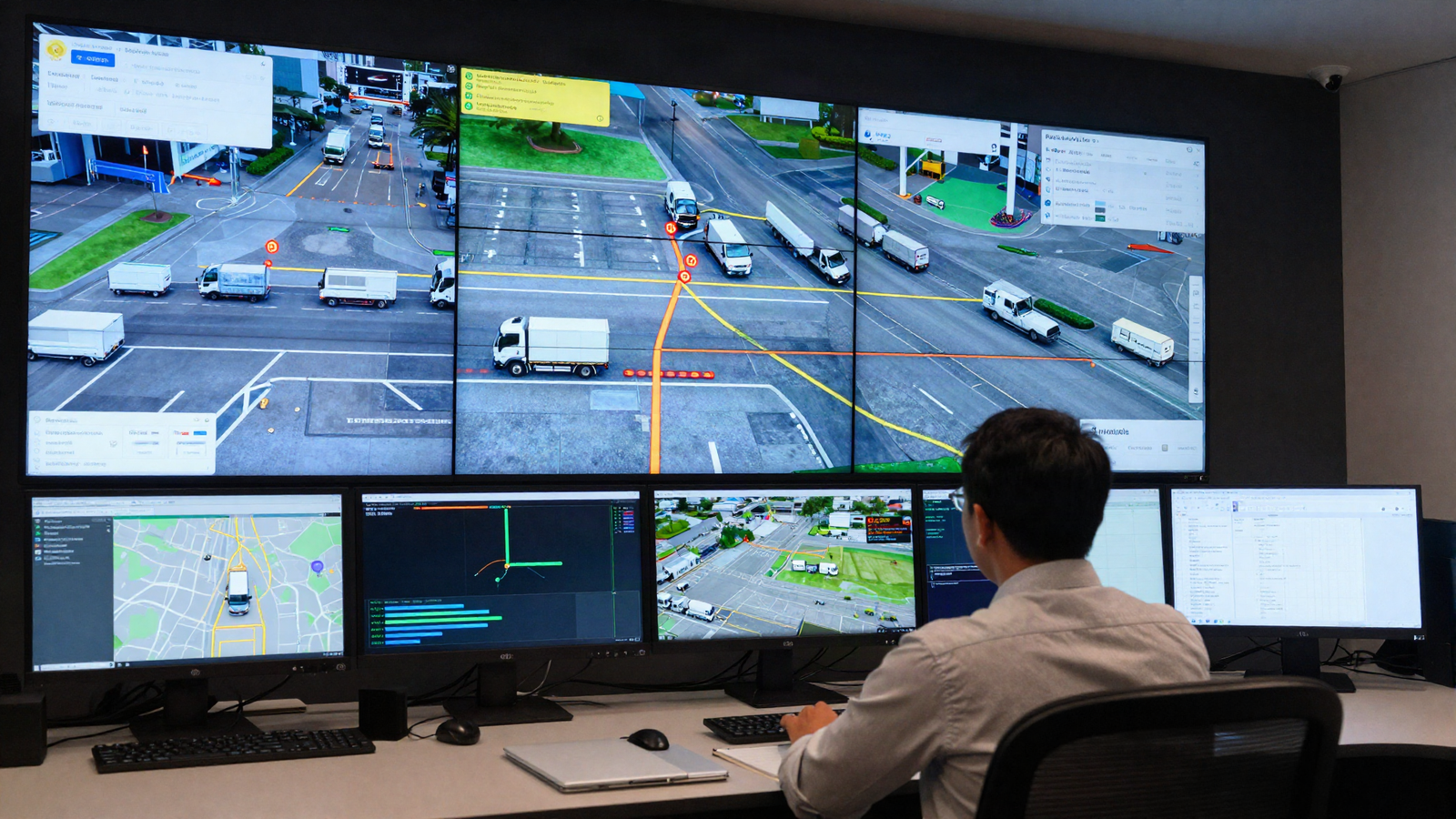
Driver behaviour scoring turns harsh braking, rapid acceleration, cornering force, and speeding events into a per-driver or per-trip score. The direct use is operational — a coaching tool, and a consistently low score is a more useful conversation starter than a general “drive safer” reminder. The question fleets ask next: does better driver-behaviour data translate into lower insurance premiums?
The honest answer: usage-based, behaviour-linked motor insurance exists as a concept in the Singapore market — pay-how-you-drive personal policies have been trialled here before, and telematics vendors regularly market the insurance angle. Harder to confirm is a specific, currently-advertised commercial fleet discount tied directly to telematics data from any named insurer; the products reviewed for this guide price primarily on fleet size, vehicle class, usage, and claims history rather than published telematics scores. Insurer pricing models are proprietary and change over time; ask your broker whether your insurer offers a telematics-linked rate. The more reliable link runs indirectly: fewer harsh-braking events tends to mean fewer claims, and claims history is something every insurer does price on — see our Commercial Vehicle Insurance guide for how NCD and fleet-scale pricing work here.
Choosing a Telematics Vendor
Most GPS fleet-tracking platforms and fuel-card telematics providers on the Singapore market cover the same core feature set — live tracking, geofencing, basic reporting — so the differentiators worth spending time on are less visible on a features comparison page.
If you want tracking alerts to feed job sheets, invoicing or customer updates, SME Digital Hub, a paid service from the same publisher, offers workflow automation for connecting that data to your daily admin.
- Data ownership and export — confirm you can export your full history if you switch providers; some contracts make this harder than it should be.
- Contract length and hardware lock-in — proprietary hardware tied to their software means switching later means replacing every unit.
- PDPA-readiness of the vendor’s systems — you’re the data controller for data collected through their platform, so ask how it’s secured and hosted.
- Integration with what you already use — fuel cards, accounting, or a maintenance tool; a platform that doesn’t integrate creates a second manual reconciliation job.
- Support responsiveness — a tracking outage or a dashcam that stops syncing is operational, not just an IT ticket; ask about actual SLAs.
Stay wary of any pitch that overstates its regulatory ties — a platform claiming direct integration with ERP 2.0 OBU data is worth verifying independently, given LTA has not published a framework for third-party access to that data.
Cost and ROI for an SME Fleet
Telematics pricing for a small Singapore fleet typically runs as a per-vehicle monthly subscription on top of an upfront hardware and installation cost, with dashcams and fuel sensors priced as add-ons rather than bundled by default. Exact pricing varies significantly by vendor, hardware tier, and contract length; get quotes for your specific fleet size. The ROI case usually comes from smaller, measurable savings rather than one large number: reduced fuel loss, fewer unplanned breakdowns from earlier maintenance alerts, less time spent reconciling mileage and fuel-card claims, and, over a longer horizon, a claims history that supports a stronger renewal conversation with your insurer.
For a fleet of five to ten vehicles, run a basic GPS-and-fuel-monitoring package for a full policy year before adding driver-behaviour scoring or dashcams, so you can attribute savings to specific features rather than adopting the full stack at once and losing track of what’s paying for itself.
FAQ
Is fleet telematics the same as LTA’s ERP 2.0 On-Board Unit?
No. The OBU is a satellite-based positioning device for road pricing and safety notifications, mandatory ahead of a 1 January 2027 deadline. Fleet telematics is a separate commercial system for tracking, driver behaviour, and fuel monitoring, bought and installed independently.
Do I need employee consent to install GPS trackers in company vehicles?
In most practical setups, yes. GPS data tied to a named driver is personal data under the PDPA, triggering notification and typically consent. A Legitimate Interests Exception exists for some security-monitoring scenarios, but it requires a documented assessment, not an assumption.
Which vehicles need a speed-limiting device in Singapore?
Goods vehicles above 12,000kg MLW and public service vehicles above 10,000kg MLW have long required them. LTA has been phasing the requirement down to lorries between 3,501kg and 12,000kg MLW, with deadlines running from around January 2026 through July 2027 depending on age and weight category. The mandated speed cap is 60km/h.
Does using dashcams in company vehicles need PDPA consent too?
Yes, if the footage can identify an individual — including a driver’s face or a recognisable number plate tied to a named employee. Treat dashcam footage the same way as GPS location data for consent and notification purposes.
Will telematics lower my commercial vehicle insurance premium?
Not directly or automatically. No major Singapore commercial motor insurer currently advertises a published telematics-linked discount as standard. The more reliable path is indirect: fewer harsh-driving events tends to mean fewer claims over time, and claims history is something insurers do price on directly.
What should a small fleet track first if budget is limited?
GPS location and fuel monitoring typically deliver the most measurable early savings for the lowest cost — theft prevention and fuel-loss detection pay for themselves faster than driver-behaviour scoring or dashcams, which are worth adding once the basics are running.
Who owns the driver data collected through a telematics platform?
Your company is the data controller regardless of which vendor’s software you use, which means PDPA obligations sit with you, not the vendor. Confirm your contract gives you export rights to your own historical data before signing.
Author: Keith Kwai, editor and publisher of SGFleetGuide, with 25 years experience in B2B and B2C companies. More about the author.
Last updated: 11 September 2026
Sources: LTA OneMotoring — ERP 2.0 | LTA — Enhancements to ERP 2.0 On-Board Unit Installation | Singapore Police Force — Speed Limiter Announcement | PDPC — Advisory Guidelines on the PDPA for Selected Topics | MSIG Singapore — Commercial Vehicle Insurance