Cyclist dies after collision with tipper truck in Katong; truck driver arrested
The collision happened at about 3.15pm at the junction of Amber Road and Amber Gardens. Police and the Singapore Civil Defence Force said the 37-year-old woman was pronounced dead at the scene by a paramedic. The 47-year-old tipper truck driver was arrested for driving without reasonable consideration causing death, and police investigations are ongoing.
The earlier accident, at about 8.30am at the junction of Kaki Bukit Avenue 2 and Eunos Link, involved a 52-year-old man on a bicycle and a taxi. He was taken conscious to Changi General Hospital, and the 64-year-old taxi driver is assisting police.
What this means for fleet operators
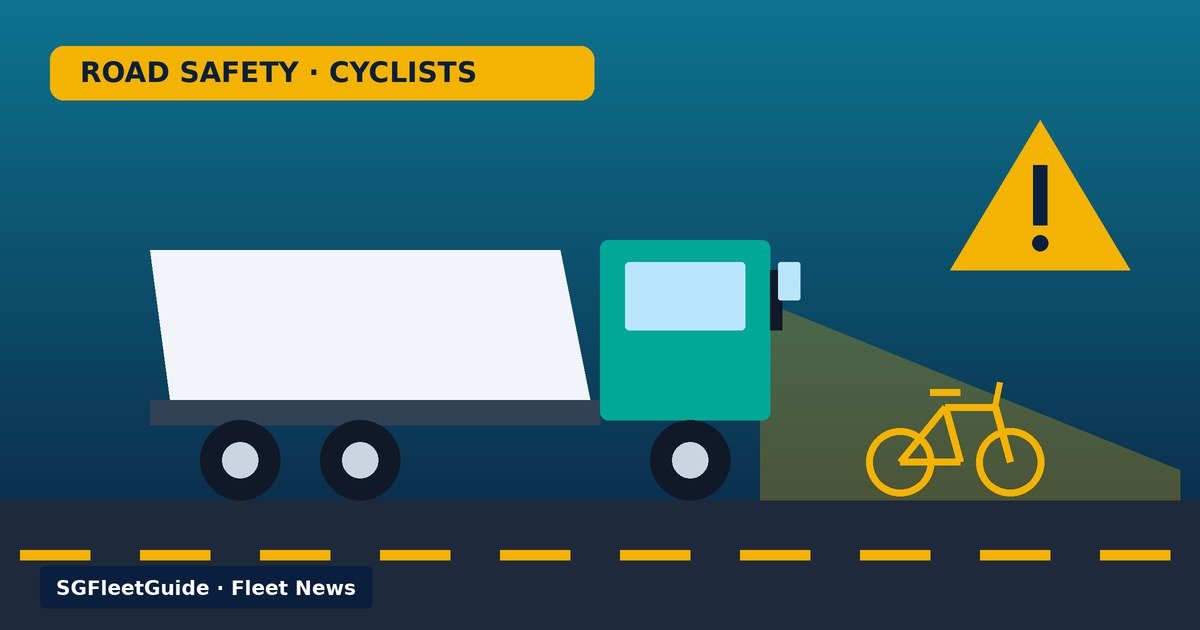
Any business that runs tippers, lorries, concrete mixers or vans through older estates and shophouse streets shares this exposure. A cyclist rides low and close to the kerb, which is exactly where a high-cab vehicle sees least. Whatever the investigation finds in this case, one serious collision means police inquiries, an insurance claim, a vehicle off the road and a shaken team, so prevention is worth an hour of your week.
Driver briefing for your next toolbox talk
- Treat every left turn as a blind-spot manoeuvre. Slow right down, check the nearside mirror twice and edge forward if the view is blocked.
- Expect cyclists to roll up beside a stopped truck at lights. Look again before moving off, even if the mirror was clear a moment ago.
- When passing a cyclist, give a wide berth. If the lane is too narrow to pass safely, stay behind until it widens.
- Clean mirrors, windows and any camera lens before every trip. A dirty lens or a cracked mirror is a blind spot you created.
- If a collision happens, stop, call for help, keep the scene safe and wait for the police.
What to do this week
- List the routes where your heavy vehicles mix with cyclists: older estates, shophouse areas, park connectors and school zones. Where customers allow, move deliveries away from morning and evening peaks.
- Walk round every heavy vehicle this week. Confirm the mirrors are complete and correctly set, and that any blind-spot camera or sensor actually works. Add these checks to your pre-trip inspection checklist.
- Review drivers’ hours for the past month. A driver near the end of a long shift reacts more slowly at junctions; our guide to fatigue management for commercial drivers sets out rostering steps.
- If you run telematics or dashcams, pull harsh braking and fast cornering events near junctions and coach the drivers involved, one to one.
- Reissue your accident procedure in writing: who the driver calls at the office, what to photograph, and where footage is stored.
Compliance check: your duties as an employer
As an employer you have a duty to take reasonably practicable steps to keep your workers, and anyone affected by your work, safe. For a transport operation that means roadworthy vehicles, drivers who are trained for the vehicle they drive, and schedules that do not push them to rush. The WSH Council (wshc.sg) publishes guidance on vehicle and traffic safety that you can build into your safety plan.
Decide in advance how you will handle a driver who is under investigation after a serious accident: whether they stay on the road, move to other duties, and what support they get. Our guide to heavy vehicle blind spot safety covers mirror set-up and the device options worth comparing.
Insurance and records
Tell your insurer about any accident promptly, even if you do not expect to claim, and keep the dashcam footage, trip records and maintenance history for that vehicle. These records help both the police inquiry and the insurer’s view of fault.
Ask your insurer what proof of driver training and vehicle checks it wants to see at renewal, and whether safety devices you have fitted are taken into account. Keep the answers on file.
Source: The Straits Times, 11 November 2026 — Read the original
General information, not legal advice.