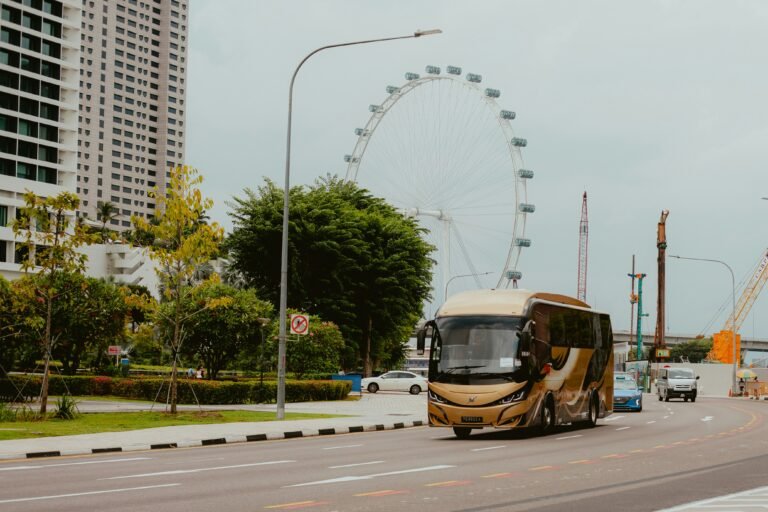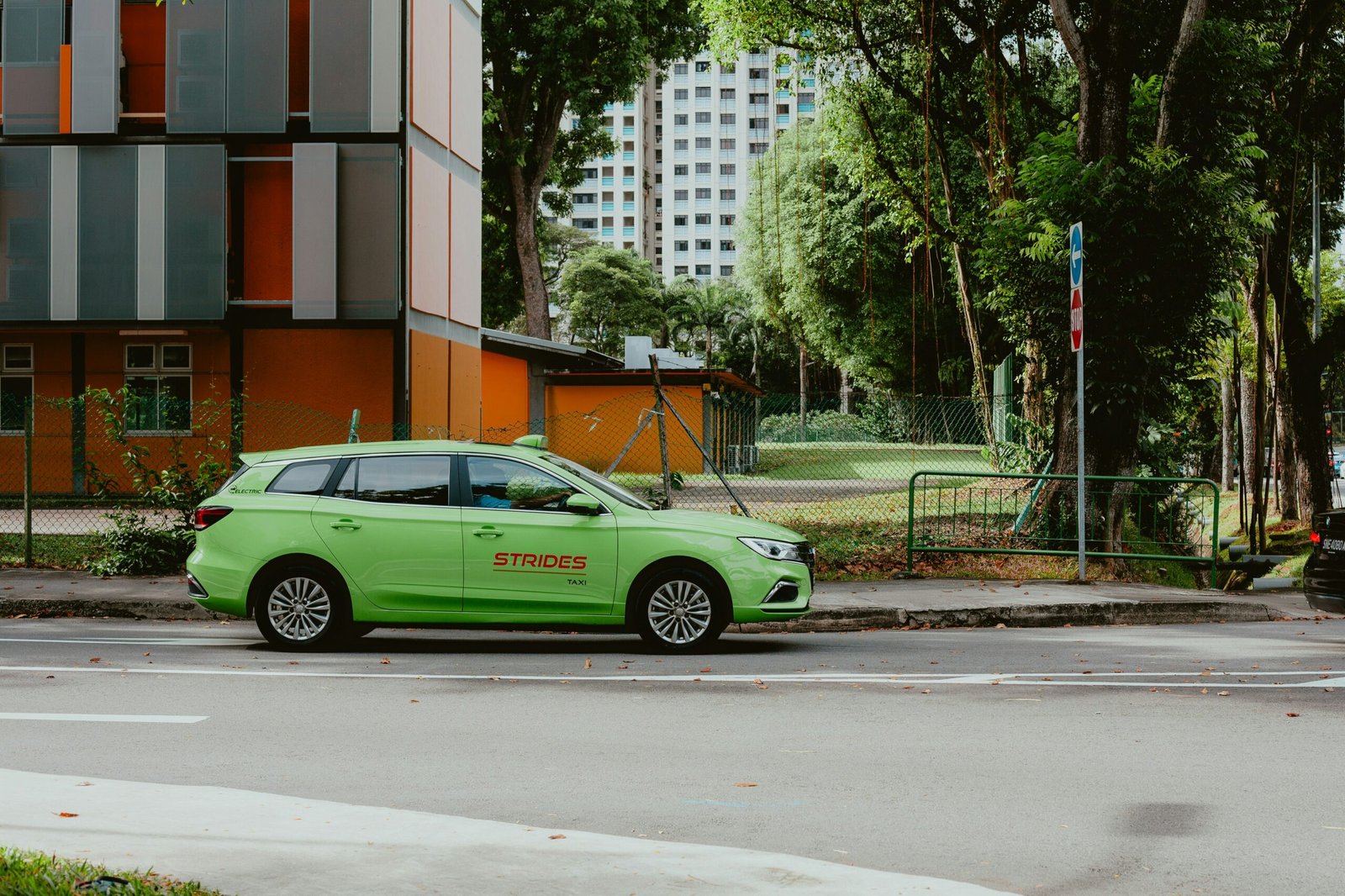
Electric Commercial Vehicles in Singapore: 2026 Complete Guide
Singapore has no single “EV grant” for commercial vehicles — it has two schemes, and neither is the EEAI (that one is for cars and taxis only). CVES covers light commercial vehicles with an incentive or surcharge based on emissions, and HVZES covers heavier vehicles for up to $40,000, with a lower rate for lighter heavy vehicles since September 2026. Which one applies, and how much you actually get, depends on your vehicle’s weight class and registration date.
Key Takeaways
- There is no single “EV grant” for commercial vehicles — the applicable schemes are CVES and HVZES, by weight class — EEAI is a separate car/taxi-only scheme and does not apply here.
- EEAI now caps at $7,500 (down from $15,000), 45% off ARF, and the scheme ends 31 December 2026 — after that, there’s currently no announced replacement.
- HVZES cut its incentive for lighter heavy vehicles (3,500–7,000kg) from $40,000 to $15,000, effective the first September 2026 COE bidding exercise — heavier vehicles above 7,000kg keep the full $40,000. This is confirmed against LTA’s own HVZES incentive terms document.
- Goods vehicles are classed by weight (LGV, HGV, VHGV, GPV); since December 2025, a standard Class 3/3A licence covers electric light goods vehicles up to 3,000kg unladen (up from 2,500kg) for battery weight.
- Fleet EV maintenance costs differ structurally, but specialist EV-technician availability is still maturing here, and depot charging capacity — not public network targets — is what actually constrains a fleet.
- Singapore’s broader target is for all new vehicle registrations to be cleaner-energy by 2030, full transition by 2040 — no diesel-specific phase-out date for goods vehicles exists separately.
Table of Contents
- The Three Schemes, Explained Separately
- Which Scheme Applies to Your Vehicle
- Weight Classes and Licensing: What You Can Actually Register and Drive
- What EVs Are Actually Available
- Charging Infrastructure for Fleets
- Maintenance: What Really Changes
- Range and Payload Trade-Offs for Fleet Routing
- Total Cost of Ownership Considerations
- FAQ
The Three Schemes, Explained Separately
Most guides to “EV grants in Singapore” blur these together. They shouldn’t be — they apply to different vehicles and different weight bands, and mixing them up is how fleet buyers end up budgeting for a rebate they don’t actually qualify for.
Commercial Vehicle Emissions Scheme (CVES) applies to qualifying commercial vehicles up to 3,500kg MLW registered between 1 April 2025 and 31 March 2027. Depending on emissions banding, a vehicle can attract an incentive of up to $15,000 or a surcharge of up to $20,000 — so this isn’t EV-exclusive; it rewards low emissions generally, with EVs typically landing at the favourable end.
EV Early Adoption Incentive (EEAI) is specifically an ARF discount: 45% off, capped at $7,500, for electric vehicles registered in 2026. Source: LTA/NEA joint release. The scheme is scheduled to end 31 December 2026, with no announced replacement as of this update.
Heavy Vehicle Zero Emissions Scheme (HVZES) targets heavier vehicles — trucks and buses — with zero tailpipe emissions, registered from 1 January 2026 to 31 December 2028. It launched at up to $40,000. A rate adjustment reportedly took effect from the first September 2026 COE bidding exercise: lighter heavy vehicles (3,500kg–7,000kg) dropped to $15,000 (paid in three instalments — $5,000 at registration, $5,000 after one year, $5,000 after two years), while heavier vehicles above 7,000kg kept the full $40,000. This is confirmed against LTA’s own HVZES incentive terms document, which sets out this exact tranche structure for both weight bands.
Full stacking rules for all three schemes are in Singapore EV Grants for Commercial Vehicles; this guide covers what the vehicles themselves look like on the road.
If you’re planning a truck purchase around the HVZES incentive, the $40,000 figure quoted elsewhere may be out of date for your weight class. Confirm the current rate for your vehicle’s MLW band directly with LTA before finalising your budget — don’t rely on last year’s number, including the one in this article.
Which Scheme Applies to Your Vehicle
| Vehicle Weight | Scheme | What You Get | Window |
|---|---|---|---|
| Up to 3,500kg MLW | CVES | Incentive up to $15,000 or surcharge up to $20,000, by emissions band | 1 Apr 2025 – 31 Mar 2027 |
| Cars & taxis only, ARF component — not applicable to goods vehicles | EEAI | 45% off ARF, capped at $7,500 | Until 31 Dec 2026 |
| 3,500kg–7,000kg MLW, zero-tailpipe | HVZES (lighter band) | Up to $15,000 (reportedly cut from $40,000 in Sept 2026) | 1 Jan 2026 – 31 Dec 2028 |
| Above 7,000kg MLW, zero-tailpipe | HVZES (heavier band) | Up to $40,000 | 1 Jan 2026 – 31 Dec 2028 |
Note that a light electric van under 3,500kg can qualify for CVES, and a zero-emission truck above 7,000kg falls under HVZES — EEAI is not available for either, since it only covers cars and taxis. Get your vehicle’s exact MLW and emissions classification from the dealer in writing before assuming which incentive you qualify for.
Weight Classes and Licensing: What You Can Actually Register and Drive
LTA groups goods vehicles by maximum laden weight (MLW): Light Goods Vehicles (LGV), up to 3,500kg — where most electric vans and small trucks sit; Heavy Goods Vehicles (HGV), 3,501–16,000kg; Very Heavy Goods Vehicles (VHGV), above 16,000kg; and Goods-cum-Passenger Vehicles (GPV), up to 5,000kg. The category, not the powertrain, governs licence class and parking-certificate needs.
Battery weight created a genuine licensing wrinkle — packs sit below the floor and typically add 400–500kg over an equivalent diesel model. From 15 December 2025, a standard Class 3/3A licence covers eLGVs and electric small buses up to 3,000kg unladen (up from 2,500kg for ICE), so battery mass alone doesn’t force a Class 4/4P upgrade. Check the actual unladen weight against your driver roster.
What EVs Are Actually Available
The commercial EV market in Singapore has moved well past a single flagship model. BYD’s T3 Electric, for example, currently starts around $95,500 (dealer pricing moves with promotions), and BYD has also brought in a T35 electric light-duty truck. Chinese manufacturers — BYD, Shineray, and others — currently lead the commercial EV segment locally, reflecting broader BEV supply chain economics rather than any Singapore-specific preference. Most electric vans and light trucks sold here sit inside the LGV band above. For fleet buyers, the practical question isn’t brand loyalty — it’s payload capacity, range against your actual routes, and after-sales support network size, since a smaller brand’s servicing network can be the real constraint, not the vehicle itself.
Charging Infrastructure for Fleets
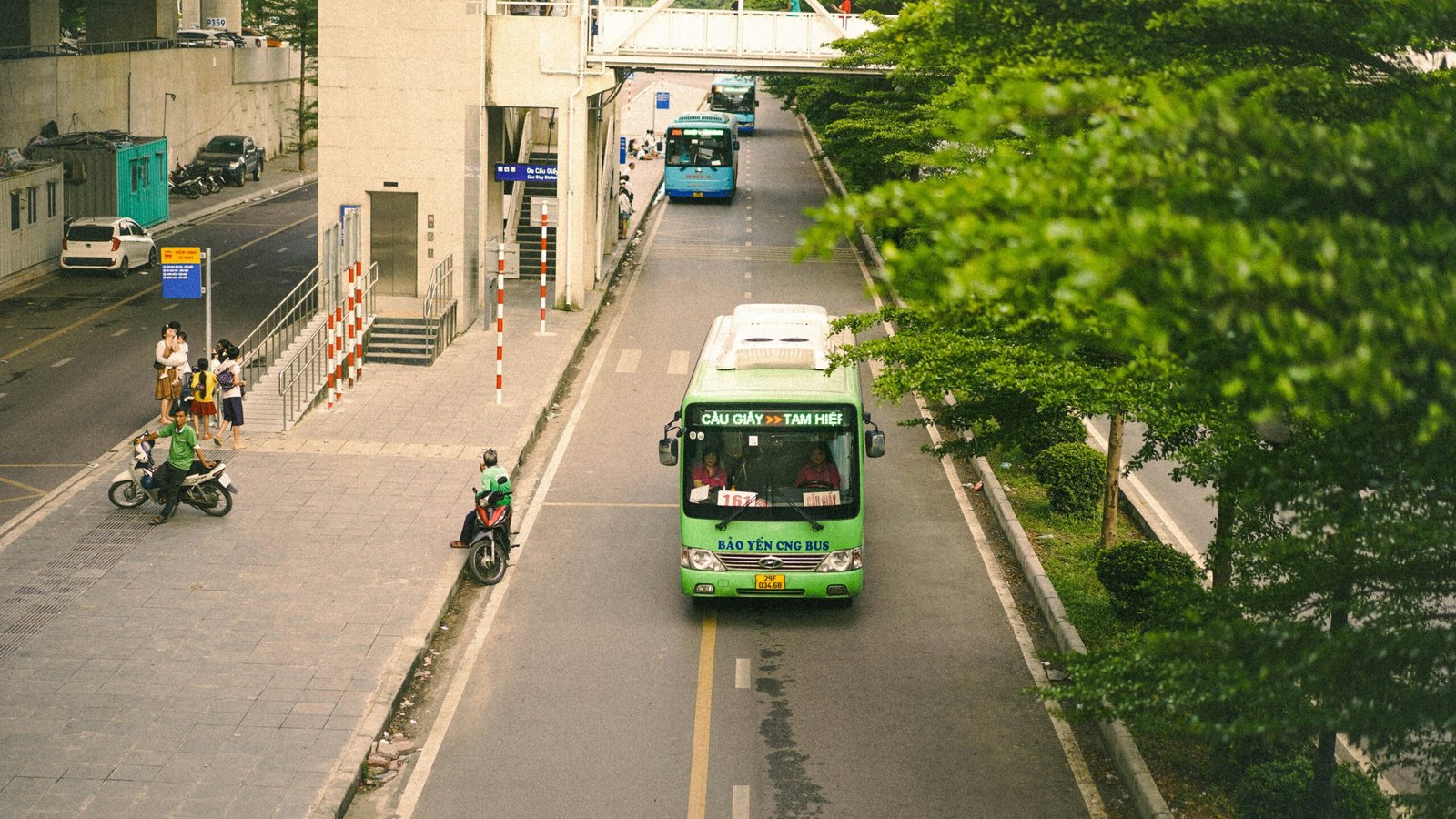
Depot charging is the practical backbone for most commercial EV fleets — vehicles return to base overnight or between shifts, which suits slower, cheaper AC charging better than relying on public DC fast-chargers during the workday. Commercial EVs here use the same standards as passenger EVs (Type 2 AC, CCS2 DC), so power availability at your own depot, not connector compatibility, is the real constraint.
National infrastructure gives context, though it isn’t built around fleets: LTA targets 60,000 charging points by 2030 (40,000 public, 20,000 private), passing the halfway mark at 30,500+ installed as of May 2026. SP Group runs the largest public network (4,600+ points, 1,100+ locations); its SP Mobility arm also offers a Corporate Fleet Account with consolidated monthly billing across 1,800+ points. Before committing at scale, get a straight answer on your depot’s electrical capacity, upgrade cost if short, and whether shift patterns allow full overnight charging.
Maintenance: What Really Changes
Electric drivetrains have meaningfully fewer moving parts than diesel — no oil changes, no timing components, less brake wear from regenerative braking. That’s a real, structural cost reduction. What it doesn’t fully offset yet is workshop maturity: high-voltage systems need safety training a diesel-trained technician doesn’t automatically have, which is why ITE runs a WSQ National EV Specialist Safety (NESS) Certification Course, with a DGUV credential attached.
A 2022 parliamentary reply from MTI recorded only around 100 technicians trained in hybrid/EV maintenance since 2021, against an original target of 1,000 — a dated snapshot, but it makes the point: verify any workshop servicing your fleet has EV-trained technicians and matching diagnostic tooling, per our guide to MRO workshops. Battery replacement, rarely triggered within a normal holding period, remains a tail risk worth pricing in upfront.
Range and Payload Trade-Offs for Fleet Routing
The battery-weight point above has a direct routing consequence: a heavier kerb weight against the same MLW ceiling means less payload headroom. If a battery adds 400–500kg over an equivalent diesel model and both are capped at 3,500kg MLW, that weight comes straight out of what you can legally carry — invisible on a spec sheet, obvious at a weighbridge.
Range interacts with that same payload: loading closer to the limit reduces real-world range, just as it dents diesel fuel economy — only more noticeably, since there’s no five-minute equivalent to a fuel top-up. Manufacturer-quoted ranges rarely match Singapore’s stop-start urban routes, so map your actual routes and worst-case load against usable range with a buffer, then check that buffer against your depot’s charging capacity. A route that comfortably fits an ICE van’s tank range on paper can still be tight for an EV once payload and a shift-bound charging window are factored in.
Total Cost of Ownership Considerations

The honest comparison isn’t sticker price against sticker price — it’s total cost of ownership over your expected holding period, including COE, applicable incentives, energy cost per kilometre versus diesel, maintenance, and resale value uncertainty (EV resale markets are still immature locally compared to diesel equivalents). We break this down in full in EV vs Diesel: Total Cost of Ownership Compared, the grant mechanics in Singapore EV Grants for Commercial Vehicles, and how ICE replacement cycles fit Singapore’s broader timeline in our guide to the 2030 ICE vehicle phase-out.
FAQ
What is the difference between CVES, EEAI, and HVZES?
CVES applies to vehicles up to 3,500kg based on emissions banding (incentive or surcharge). EEAI is a 45%-off-ARF discount capped at $7,500, ending 31 December 2026, but it’s for cars and taxis only — it doesn’t apply to commercial vehicles. HVZES targets heavier zero-tailpipe vehicles with incentives up to $40,000, though lighter heavy vehicles reportedly saw a rate cut to $15,000 from September 2026.
Can I combine CVES and EEAI on the same vehicle?
No — EEAI is restricted to cars and taxis and cannot be claimed on any commercial vehicle, regardless of weight or emissions class. Your goods vehicle will fall under CVES or HVZES depending on its weight band, not both, and not EEAI — check with LTA or your dealer for your vehicle’s exact classification.
What licence do I need to drive an electric light goods vehicle?
A standard Class 3 or Class 3A licence, since December 2025, covers eLGVs and electric small buses up to 3,000kg unladen weight — up from 2,500kg for ICE — to account for battery weight.
When does the EV Early Adoption Incentive end?
31 December 2026, per LTA and NEA’s joint announcement — with no announced replacement as of this update.
Is there a diesel ban date for commercial vehicles in Singapore?
Not a truck-specific one. LTA’s broader target is for all new vehicle registrations to be cleaner-energy by 2030, with full fleet transition targeted by 2040; a diesel-specific phase-out for goods vehicles as a standalone policy hasn’t been published separately.
Do electric commercial vehicles cost less to maintain?
Generally yes on routine servicing, thanks to fewer moving parts and regenerative braking — but factor in still-maturing EV-specialist workshop capacity and long-run battery costs.
Is depot charging enough for a commercial EV fleet, or do I need fast chargers?
For most single-shift duty cycles, overnight depot AC charging is sufficient and cheaper. Multi-shift operations may need faster charging capacity — check your actual routes and shift patterns, and your depot’s electrical supply capacity, before committing to charging infrastructure.
Author: Keith Kwai, editor and publisher of SGFleetGuide, with 25 years experience in B2B and B2C companies. More about the author.
Last updated: 11 September 2026
Sources: LTA/NEA — Extension of VES and EEAI | LTA — Our EV Roadmap | LTA — Goods Vehicle Importation Guidelines | LTA — Commercial Vehicle Weight Classes | SPF — eLGV Licence Rule Change | LTA — EV Charging Points Target | SP Group — EV Charging | SP Mobility — Fleet Account | ITE — NESS EV Certification | MTI — EV Workshop PQ Reply