Construction-Sector Fleet Configuration: What to Buy for a Singapore Construction Fleet
A Singapore construction fleet is really three fleets in one: a general lorry pool for materials and tools (usually LGV/G-plate or light HGV/Y-plate), a specialised plant fleet for tipping, mixing and lifting (mostly HGV/Y-plate, some VHGV/X-plate), and an occasional heavy-haul capability (prime mover plus lowbed trailer, X-plate) that most mid-sized contractors rent rather than own. Get the plate classification and axle configuration right before you spec anything, because it determines the driving licence class, the COE renewal economics, and whether the vehicle can even access a given worksite.
Key Takeaways
- Plates map to weight and axles, not vehicle type: G-plate (LGV, ≤3,500kg), Y-plate (HGV, generally 2-axle goods vehicles above 3,500kg), and X-plate (VHGV/prime movers, typically 3+ axles or built to pull rather than carry) each require a different driving licence class and change how a vehicle can be deployed.
- COE Category C is one bucket for all goods vehicles and buses: a 3.5-tonne lorry and a 30-tonne tipper bid in the same COE category, so the heavier vehicle usually delivers more payload per dollar of COE — right-sizing upward often beats running more small trucks.
- Tippers, mixers, cranes and lowbeds have very different utilisation profiles: tippers and general lorries run daily and are worth owning; lowbed trailers and mobile cranes often sit idle between mobilisations and are frequently rented instead.
- Frame and chassis condition matters more than mileage for used tippers and mixers: the repeated tipping and vibration loads these vehicles carry stress the chassis in ways odometer readings don’t capture.
- COE renewal (PQP) is a bigger driver of construction fleet cost than most operators budget for: because heavy goods vehicles are capital-intensive to replace, many firms extend on PQP renewal loans rather than re-bid for a new COE.
- Site access constraints can override the “bigger is better” COE logic: a narrow site road or low overhead clearance can force a 2-axle Y-plate tipper even where a 3-axle X-plate unit would be more COE-efficient.
Table of Contents
- Understanding X-Plate, Y-Plate and LGV Classification
- Tipper Trucks and Dump Trucks
- Concrete Mixer Trucks
- Flatbed and Lowbed Trailers for Equipment Transport
- Lorry Cranes and Cargo Cranes
- Construction Task to Vehicle Type: Quick Reference
- Payload and COE Category Considerations
- Buying New vs Used for a Construction Fleet
- Financing Patterns Specific to Construction Firms
- Practical Fleet-Sizing and Spec Advice
- FAQ
- Sources
Understanding X-Plate, Y-Plate and LGV Classification
Most generic commercial-vehicle content in Singapore treats “lorry” as a single category and moves straight to brand comparisons. For a construction fleet that’s a mistake, because the plate a vehicle is registered under is a legal classification that determines the driving licence your operators need, how the vehicle can be used, and — indirectly — its resale value. If you haven’t already, it’s worth reading our broader primer on commercial vehicle types in Singapore before drilling into the construction-specific detail below.
LTA classifies goods vehicles by Maximum Laden Weight (MLW) — the fully loaded weight of the vehicle including cargo, not the empty (unladen) weight:
- Light Goods Vehicle (LGV): MLW not exceeding 3,500kg. Registered under a G-plate (the visible prefix on the plate itself, e.g. GBA, GBN series). A Class 3 driving licence covers most LGVs. Within the LGV band, LTA further distinguishes a vehicle’s registered use — a Y-plate at this weight band signals private/non-commercial goods use, while a G-plate signals registered commercial goods transport (deliveries, trade, business use). LTA’s public pages describe the weight-band classifications clearly; the private-vs-commercial-use distinction within the G/Y naming came from secondary trade sources rather than a primary LTA page we could directly verify, so treat this nuance as directionally correct but confirm your own vehicle’s registered use with your dealer or LTA before assuming it.
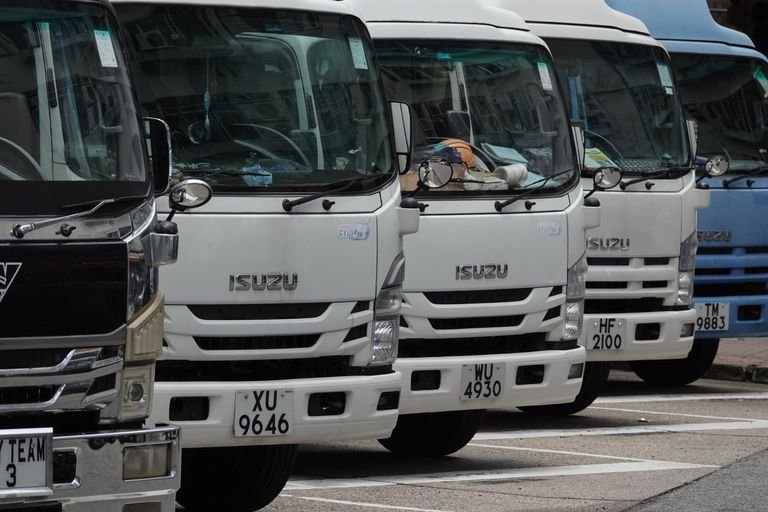
- Heavy Goods Vehicle (HGV): MLW between 3,501kg and 16,000kg. Registered under a Y-plate, generally corresponding to goods vehicles built to carry a load or passengers on two axles. Requires a Class 4 vocational driving licence.
- Very Heavy Goods Vehicle (VHGV): MLW exceeding 16,000kg. Registered under an X-plate, generally corresponding to vehicles with more than two axles, or prime movers not constructed to carry load themselves (i.e. they exist to pull a trailer). Requires a Class 5 vocational driving licence.
The axle-count and “constructed to carry load” distinction matters specifically for construction fleets: a prime mover that tows a lowbed trailer carrying an excavator is itself carrying nothing, so it is classified — and plated — differently from a rigid tipper truck that carries its own load in a tipping body. This axle/prime-mover distinction is consistent across the secondary sources we cross-checked, but LTA’s own Road Traffic Rules schedule, which is the primary legal text, was not directly accessible during research; verify against your logbook or LTA VRL if the classification affects a purchase decision.
Separately, there’s a fourth category worth knowing: the Goods-cum-Passengers Vehicle (GPV), capped at 5,000kg MLW, covering dual-purpose vehicles like twin-cab pickups and panel vans that carry both crew and light materials. Many smaller construction outfits run their site-supervisor pickups and tool vans under this classification rather than as pure goods vehicles.
Driving an HGV or VHGV without the corresponding Class 4 or Class 5 vocational licence is a traffic offence, and it’s the operator’s — not just the driver’s — problem if a fleet vehicle is caught being driven by an unlicensed operator. When onboarding drivers for tipper, mixer or crane-truck roles, confirm the vocational licence class matches the vehicle’s actual plate classification, not just the vehicle’s apparent size — a compact-looking 3-axle mixer can still be an X-plate VHGV.
Tipper Trucks and Dump Trucks
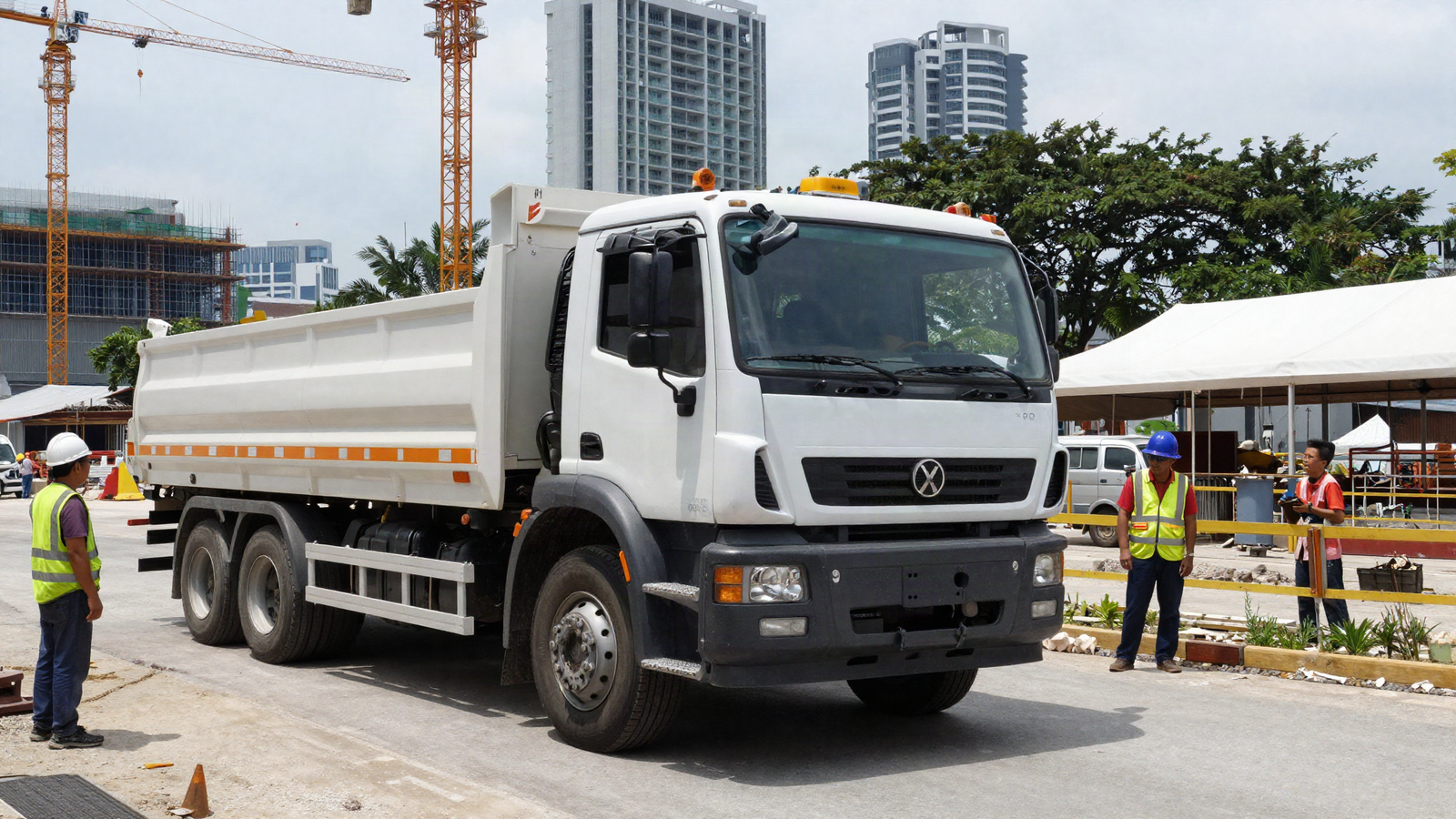
The tipper is the workhorse of a Singapore construction fleet — hauling excavated soil, demolition debris, sand and aggregate between site and disposal or supply points. Two configurations dominate the local market:
- 2-axle rigid tippers (Y-plate, HGV): typically built on chassis such as the Hino FC/FD, Isuzu FVR, or UD Condor range, with GVW roughly in the 13,000–16,000kg bracket and a practical payload around 8–10 tonnes depending on body and fit-out. These figures are typical market specifications for this chassis class rather than a single verified LTA or manufacturer source. These are the most flexible tippers for tight urban sites because of their turning radius and lower unladen weight.
- 3-axle rigid tippers (X-plate, VHGV): chassis like the Hino FM, Isuzu FVZ/FVM, UD Quon, Scania P- or G-series, with GVW commonly 24,000–26,000kg and payload in the 15–17 tonne range. As above, these are representative market specs, not figures from a single confirmed source. These move roughly 1.7–2x the payload of a 2-axle unit for a COE bid that sits in the same Category C pool, which is the core economic argument for going 3-axle where site access allows.
Note that “dump truck” in the Singapore context more often refers to off-road or semi-off-road articulated haulers used within large earthworks sites (reclamation, quarries, MRT tunnel-boring spoil handling) that may not need public-road registration at all if they never leave the site boundary — these are typically registered as engineering plant rather than as goods vehicles, with different rules around lifespan and use. A public-road tipper, by contrast, carries a 20-year statutory lifespan limit like other goods vehicles, and must be deregistered or exported once that clock runs out. For the buying process itself, our guide to how to buy a commercial vehicle in Singapore covers COE bidding mechanics that apply equally to tippers.
Concrete Mixer Trucks
Ready-mix concrete in Singapore is overwhelmingly supplied by third-party batching plants rather than self-mixed on most sites, so many contractors don’t own mixer trucks at all — they schedule deliveries from a ready-mix supplier and the supplier’s fleet does the hauling. Where a contractor does run its own mixers (larger design-and-build firms, or those doing high-volume precast or in-situ work on remote sites), the standard spec is a 3-axle rigid chassis (Hino, Isuzu Giga, UD Quon, or Mercedes-Benz Arocs) carrying a rotating drum with 6–9 cubic metre capacity, giving roughly 12–16 tonnes of wet concrete per load depending on mix design. Drum capacity and payload figures are representative of the equipment commonly seen in the Singapore market rather than confirmed against a single manufacturer datasheet.
Because of the drum’s height and the three-axle configuration, most mixer trucks fall into the X-plate VHGV band. This has a practical knock-on effect: drivers need a Class 5 vocational licence, and the vehicle’s turning circle and height (often 3.6–3.9m laden) rule out sites with tight internal roads or low overhead services — a constraint worth checking against your site access plan before committing to owning rather than sub-contracting mixer capacity.
A mixer truck that sits idle between pours is one of the most expensive assets a construction fleet can own — road tax, insurance and COE amortisation accrue whether the drum turns or not. Unless your projects consistently need in-house mixing (rare given Singapore’s dense ready-mix supplier network), renting or sub-contracting mixer capacity for the specific pour dates is usually cheaper than owning, especially for firms running fewer than two to three concrete-heavy projects concurrently.
Flatbed and Lowbed Trailers for Equipment Transport
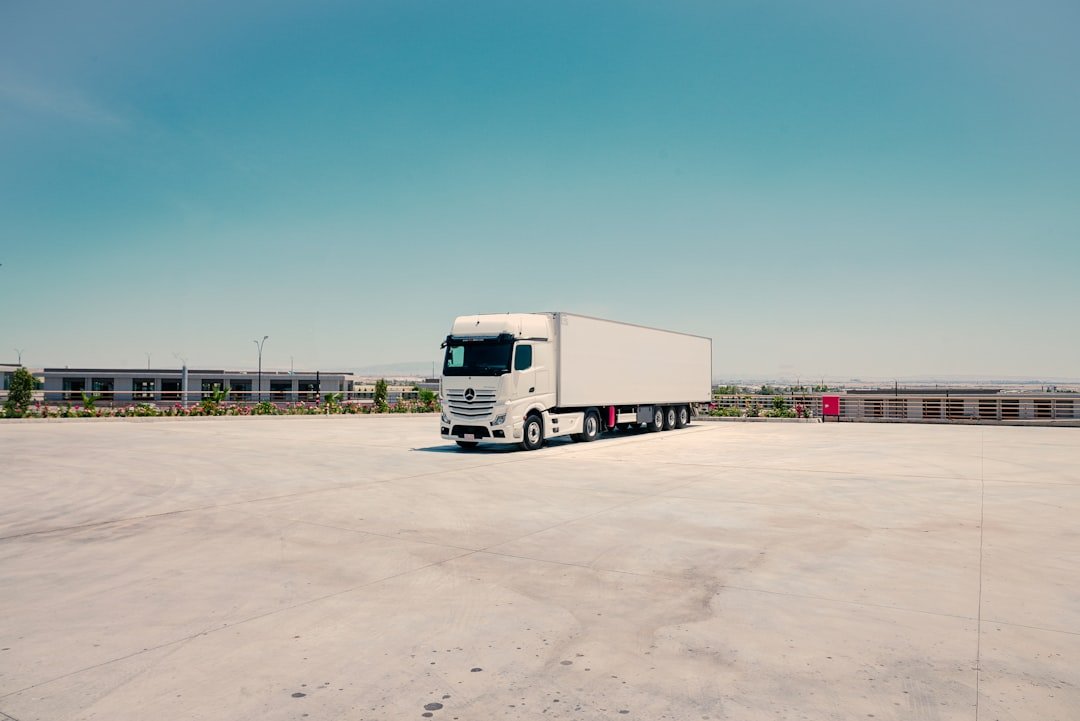
Mobilising an excavator, piling rig, crawler crane or compactor between sites (or from port to site) needs a prime mover and a low-loading trailer, not a rigid truck. The prime mover itself — since it carries no load — is registered as an X-plate VHGV, typically a 2- or 3-axle tractor unit (Scania G/R-series, Volvo FM/FH, MAN TGS are common in the local heavy-haul market). The trailer is registered and plated separately from the prime mover, and its axle count (2, 3, or multi-axle modular) is chosen based on the gross weight of the plant being carried — a mini-excavator under 5 tonnes needs a modest 2-axle lowbed, while a 20-tonne excavator or crawler crane needs a 3-axle or hydraulic modular trailer rated well above the equipment’s operating weight to allow for loading ramps, chains and safety margin.
This is the segment of a construction fleet least worth owning outright unless your firm does frequent, scheduled plant relocations (large earthworks or piling contractors moving between concurrent sites weekly). For most general building contractors, heavy-haul transport is a specialist, licensed activity — LTA requires an Excessive Dimension Permit or Heavy Vehicle Permit for oversize/overweight loads above standard limits — and outsourcing to a dedicated heavy-haulage operator avoids both the capital outlay and the permit-application overhead for what might be a handful of moves per year.
Lorry Cranes and Cargo Cranes
The “lorry crane” (often called by the genericised brand name Hiab, after the Swedish manufacturer) is a flatbed or dropside truck with a hydraulic knuckle-boom crane mounted behind the cab, used for loading and unloading materials — rebar bundles, formwork, precast elements, site cabins — without needing a separate mobile crane on-site. Local fleets typically spec these on a 2-axle Y-plate HGV chassis for lighter lifting duties (crane capacity roughly 3–7 tonne-metres, meaning it can lift perhaps 1–2 tonnes at a useful reach of 4–6 metres), stepping up to a 3-axle X-plate chassis for heavier or longer-reach requirements (10 tonne-metres and above). Tonne-metre figures are representative of commonly deployed lorry crane models in Singapore rather than a single confirmed spec sheet.
A genuinely separate category from the lorry crane is the crawler or mobile crane used for structural lifts (steel erection, precast panel installation) — these are typically not self-registered goods vehicles for road use at all, but engineering plant transported to site via the lowbed arrangement described above, then operated within the site boundary. Confusing a lorry crane (a road-going HGV/VHGV with a modest boom, useful for materials handling) with a mobile crane (a purpose-built lifting machine, usually rented per lift or per project) is a common spec mistake among first-time construction fleet buyers.
Construction Task to Vehicle Type: Quick Reference
| Construction Task | Recommended Vehicle Type | Typical Payload / Capacity | Likely Plate / COE Category |
|---|---|---|---|
| Soil/debris haulage, urban site | 2-axle rigid tipper | ~8–10 tonnes | Y-plate, HGV, COE Cat C |
| Soil/debris haulage, high volume | 3-axle rigid tipper | ~15–17 tonnes | X-plate, VHGV, COE Cat C |
| In-house ready-mix concrete | 3-axle mixer truck (6–9m³ drum) | ~12–16 tonnes concrete | X-plate, VHGV, COE Cat C |
| Materials/tool transport, general | 14ft box or flatbed lorry | ~2.5–3 tonnes | G-plate/Y-plate, LGV/HGV, COE Cat C |
| Site plant mobilisation (excavator, roller) | Prime mover + lowbed trailer | Trailer-rated to plant weight + margin | X-plate prime mover, VHGV, COE Cat C |
| On-site materials handling / loading | Lorry crane (knuckle-boom, flatbed) | 1–2 tonnes at 4–6m reach (light); more on 3-axle units | Y-plate or X-plate depending on chassis, COE Cat C |
| Structural lifts (steel, precast) | Mobile/crawler crane (rented, not self-driven on road) | Per-lift capacity, project-specific | Usually not a road-registered goods vehicle |
Payload and COE Category Considerations

Unlike passenger cars, which split into Category A and Category B by engine size and power, LTA groups all goods vehicles and buses into a single COE Category C, regardless of whether the vehicle is a 3.5-tonne panel van or a 30-tonne tipper. This has a real strategic implication for construction fleet planning: because a COE bid in Category C costs the same whether you attach it to a small or large vehicle, the effective “COE cost per tonne of payload” drops sharply as you move up in vehicle size. For background on how this category behaves and how PQP renewal pricing works, see our dedicated guide to COE Category C in Singapore.
In practice this pushes many construction fleets toward fewer, larger vehicles rather than more, smaller ones — a single 3-axle tipper often out-earns two 2-axle tippers per COE slot over a project’s life. The counter-pressure is site access: dense urban redevelopment sites, landed housing infill projects, and anywhere with narrow access roads or tight turning points can make a large rigid vehicle simply undeployable, forcing a smaller, less COE-efficient unit regardless of the underlying economics. Speed limiters are also mandatory for goods vehicles between 3,501kg and 12,000kg MLW (and progressively for heavier classes), which is a compliance item worth checking on any used HGV/VHGV purchase, since a missing or non-compliant limiter is a common inspection failure point.
Buying New vs Used for a Construction Fleet
The used market for HGVs and VHGVs in Singapore is active and, for construction-specific vehicles like tippers, often more liquid than for general lorries, because contractors routinely rotate fleets in and out as projects start and finish. Buying used with an existing COE (rather than bidding fresh) avoids COE-price volatility entirely, but the calculation changes sharply depending on how much COE tenure remains — a tipper with 8 years of COE left retains meaningful resale value, while one with 2 years left is close to being valued on scrap/parts terms plus a short-term rental substitute value.
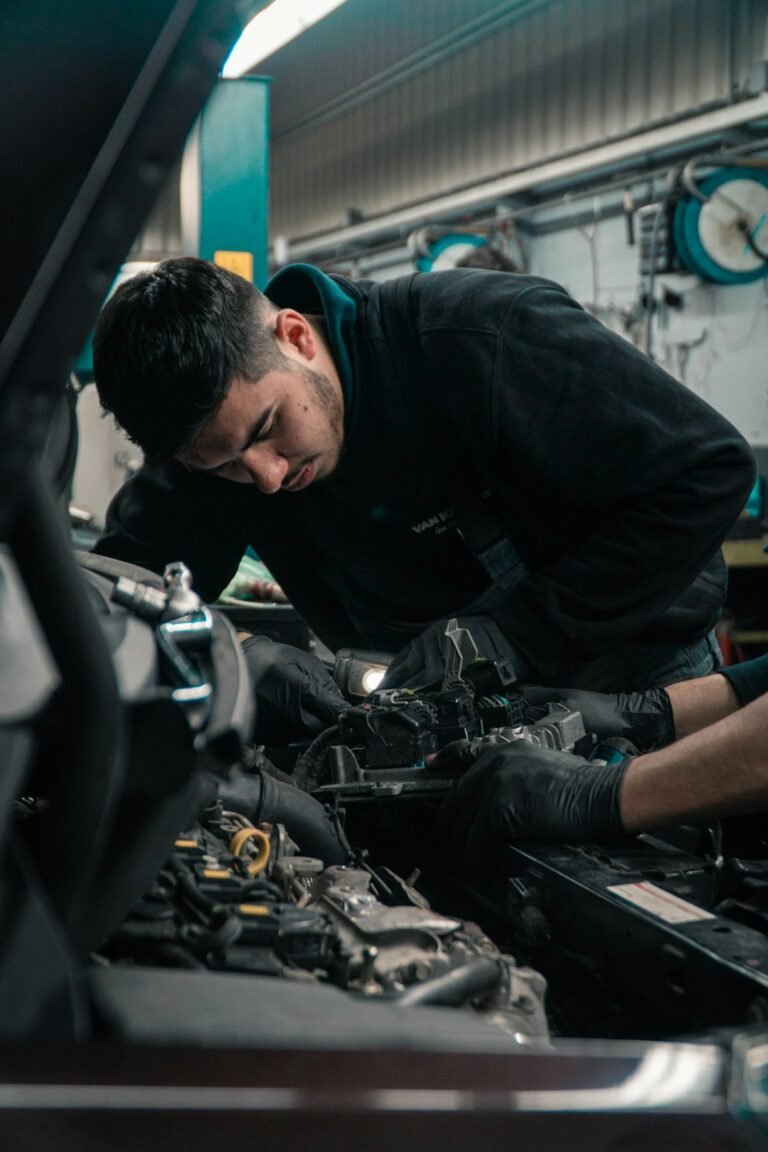
For tippers and mixers specifically, chassis and frame condition matters more than it does for a general lorry, because the repeated stress of tipping cycles (for tippers) and drum rotation loads (for mixers) fatigues the chassis rails and mounting points in ways that don’t necessarily show up in odometer mileage or a cursory inspection. A pre-purchase inspection for these vehicle types should specifically check for frame cracking near the tipping ram mount, hydraulic ram and cylinder condition, and — for mixers — drum wall thickness (concrete is abrasive and wears the drum from the inside over years of use). Our general used commercial vehicle buying checklist covers the baseline items; treat tipping and mixing mechanisms as additional line items on top of that baseline, not a substitute for it.
Financing Patterns Specific to Construction Firms
Construction firms finance fleet vehicles somewhat differently from general logistics or delivery businesses, for two structural reasons: project-based cash flow (revenue arrives in progress claims, not steady monthly billing) and the high capital cost of VHGV-class equipment relative to smaller operators.
- Hire purchase remains the dominant structure for owned tippers, mixers and lorry cranes, typically financed at 70–90% of vehicle value (including COE) over terms that are often deliberately shorter than the vehicle’s registration life, so the loan is cleared well before the first COE renewal decision point.
- PQP (Prevailing Quota Premium) renewal loans are common for extending an existing HGV/VHGV past its first 10-year COE term rather than replacing it outright — for a fully depreciated tipper that’s still mechanically sound, renewing COE on a PQP loan is frequently cheaper than bidding for a new vehicle, especially when COE premiums are elevated.
- Operating leases and equipment rental dominate for low-utilisation, high-capital items — lowbed trailers, mobile cranes, and specialised attachments — where ownership cost per year of the asset’s idle time simply doesn’t pencil out for a firm without constant demand for that specific capability.
- Sale-and-leaseback shows up periodically among mid-sized contractors managing tight project cash flow, monetising an owned fleet asset while retaining operational use of it, though this is a less common pattern than straightforward hire purchase or rental.
A vehicle financed under hire purchase is still the registered owner’s full legal responsibility for roadworthiness, inspection deadlines and driver licensing compliance — financing structure has no bearing on regulatory liability. Build COE renewal and periodic inspection deadlines into your fleet calendar independently of your loan amortisation schedule, since the two rarely align.
Practical Fleet-Sizing and Spec Advice
A handful of rules of thumb that hold reasonably well across mid-sized Singapore construction fleets:
- Own what runs daily, rent what runs occasionally. General lorries and your primary tipper(s) typically justify ownership. Lowbed trailers, mobile cranes and specialised attachments usually don’t, unless your project pipeline guarantees near-continuous use.
- Match axle configuration to your actual site mix, not your biggest project. If most of your work is dense urban redevelopment with tight access, a fleet of 2-axle Y-plate tippers that can actually get in and out beats a COE-efficient 3-axle fleet that can’t reach half your sites.
- Budget PQP renewal as a recurring line item, not a one-off decision. For firms running VHGV tippers and mixers past year 10, treat the renewal-vs-replace decision as an annual fleet review item rather than something decided reactively when a COE lapses.
- Separate driver licensing planning from vehicle planning. A fleet expansion into X-plate VHGV territory (a first mixer truck, a first heavy tipper) is also a hiring and licensing decision — Class 5 vocational licence holders are a smaller labour pool than Class 3/4, and this can be the actual bottleneck on fleet growth, not vehicle availability or COE.
- Keep a general-purpose LGV or GPV vehicle outside the “heavy fleet” budget line. Site supervision, tool runs and small-parts pickup don’t need a Y- or X-plate vehicle, and running them on the heavy fleet’s maintenance and insurance program usually costs more than treating them as a separate, lighter category.
FAQ
What’s the actual difference between a Y-plate and an X-plate vehicle in Singapore?
Y-plates generally apply to Heavy Goods Vehicles (3,501–16,000kg MLW) built on two axles to carry a load or passengers, requiring a Class 4 licence. X-plates generally apply to Very Heavy Goods Vehicles (over 16,000kg) with more than two axles, or prime movers built to pull rather than carry, requiring a Class 5 licence. Confirm against your specific vehicle’s logbook, as edge cases exist.
Can an LGV (G-plate) be used for construction work?
Yes, for lighter tasks — tool transport, small-parts delivery, site supervisor vehicles — but its 3,500kg MLW ceiling makes it unsuitable for tipping, mixing or crane duties, which almost always require HGV or VHGV classification.
Do all goods vehicles and buses really sit in the same COE category?
Yes. COE Category C covers all goods vehicles and buses regardless of size, unlike passenger cars which split by engine size and power into Categories A and B. This makes larger vehicles generally more COE-efficient per tonne of payload.
Is it better to own or rent a mobile crane for a construction project?
For most contractors, renting is more cost-effective, since mobile and crawler cranes are typically not road-registered goods vehicles and see intermittent, project-specific use. Owning only makes sense with near-continuous, predictable lifting demand across concurrent projects.
How long can a tipper truck or mixer truck stay registered in Singapore?
Goods vehicles, including tippers and mixers, are subject to a 20-year statutory lifespan from first registration, after which they must be deregistered or exported, separate from the 10-year COE renewal cycle that determines ongoing road tax and usage rights.
What licence does a driver need to operate a lorry crane?
It depends on the chassis: a lorry crane built on a 2-axle Y-plate HGV chassis needs a Class 4 vocational licence, while one on a 3-axle X-plate VHGV chassis needs Class 5. The crane operation itself may also require separate lifting equipment competency depending on capacity and site requirements.
Should a small construction firm buy new or used tippers first?
Most small and newly formed contractors start with used HGV tippers carrying substantial remaining COE tenure, since it avoids COE-bidding volatility and lowers upfront capital risk while the firm builds a project track record before committing to new-vehicle finance.
Sources
- LTA OneMotoring — Goods Vehicle and Engineering Plant
- LTA OneMotoring — Certificate of Entitlement (COE)
- LTA OneMotoring — Standard Registration
- LTA OneMotoring — Off-Peak Car Schemes
- LTA OneMotoring — Commercial Vehicles
- Vehicle registration plates of Singapore — Wikipedia
- Guide to Different Car Licence Plates in Singapore — DollarsAndSense
Written by the SGFleetGuide editorial team. Last updated: 12 September 2026.