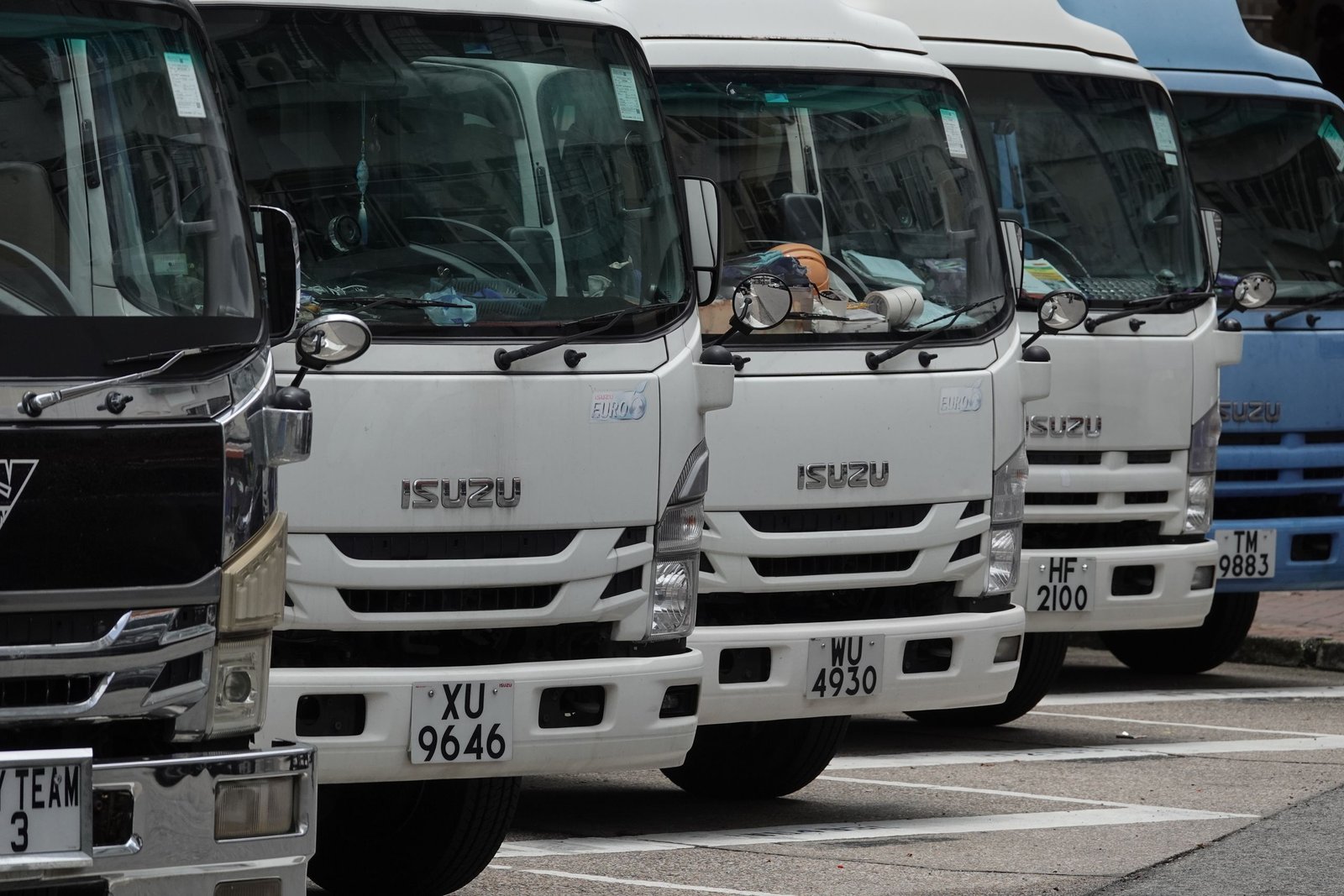
Types of Commercial Vehicles in Singapore: A Buyer’s Guide to Vans, Lorries, Trucks and Buses
LTA classifies goods vehicles by weight into four bands — light, heavy, very heavy, and goods-cum-passenger — and buses by how they’re used rather than by size. All of them share COE Category C. The right class for your business depends less on brand or price and more on payload, the driving licence your staff actually hold, and whether the vehicle can physically get in and out of where you operate.
Key Takeaways
- LTA sorts goods vehicles by weight, not by what they look like: light goods vehicle (LGV), heavy goods vehicle (HGV), very heavy goods vehicle (VHGV), and goods-cum-passenger vehicle (GPV) are the four official bands.
- Buses are classified by use, not tonnage: private bus, private hire bus, excursion bus, school bus and omnibus each carry different operating rules.
- COE Category C covers both goods vehicles and buses: it decides your bidding pool, not which class of vehicle fits your operation.
- Your driving licence class can rule out a vehicle before price does: a fleet of Class 3 drivers can’t legally take out anything registered above the weight their licence permits.
- Singapore’s built environment is a real constraint: carpark height clearances, loading bay depths and estate road widths eliminate options that look fine on a spec sheet.
- Financing terms move with vehicle class: a bank underwriting a compact van and one underwriting a 16-tonne lorry are pricing two different risks.
How LTA Actually Classifies Goods Vehicles
Most owners talk about “vans” and “lorries” as if those were official categories. They aren’t. LTA classifies goods vehicles by maximum laden weight (MLW) — the vehicle’s own weight plus everything it’s rated to carry — into four bands, and the band a vehicle falls into shapes its restrictions and, in practice, who’s allowed to drive it.
The four categories, per LTA’s official commercial vehicle classification, are:
- Light Goods Vehicle (LGV): maximum laden weight up to 3,500kg. This covers most panel vans, small pickups and box vans used for last-mile delivery and trade work.
- Heavy Goods Vehicle (HGV): MLW from 3,501kg to 16,000kg. This is where mid-size lorries and rigid trucks used for freight, construction supply and distribution sit.
- Very Heavy Goods Vehicle (VHGV): MLW above 16,000kg. Large rigid trucks and prime movers for bulk freight and heavy logistics fall here.
- Goods-cum-Passenger Vehicle (GPV): MLW up to 5,000kg, built to carry both cargo and people — station wagons, panel vans with rear seating, and twin-cab pickups are the typical examples.
LGV and GPV overlap in weight range but not in function — a GPV’s cabin is built for passengers as well as cargo, which is why a twin-cab pickup sits in its own bracket rather than being treated as a light lorry. If your business needs a vehicle that occasionally carries a small crew and their equipment, a GPV configuration covers that without stepping up to a bus registration.
These weight bands are fixed by regulation, not by what a dealer lists a vehicle as. Always check the maximum laden weight on the vehicle log card (or the manufacturer’s specification sheet before registration) against LTA’s thresholds — a vehicle marketed as a “light lorry” can still register as an HGV if its MLW crosses 3,500kg.
Where Buses Fit In
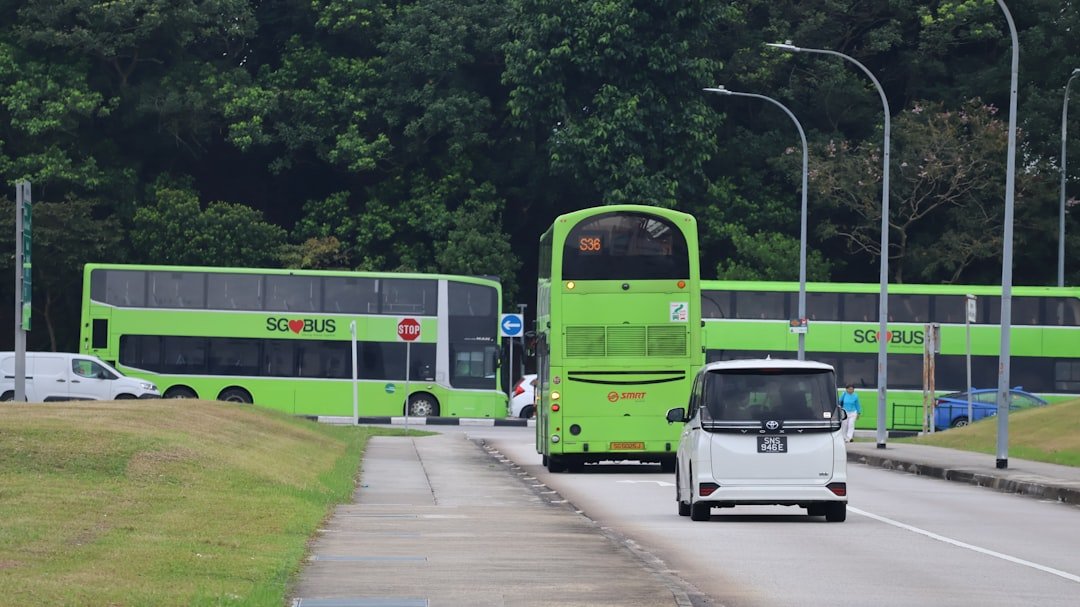
Buses don’t get a weight ladder the way goods vehicles do. LTA instead classifies them by how they’re used, which matters more for compliance than for engineering:
- Private bus: ferries employees or people connected to the owner’s business — the typical staff-transport bus for a company running shift work or an outlying worksite.
- Private hire bus: ferries students or workers on a hired basis, and can be chartered for other purposes.
- Excursion bus: mainly for tourists, though it can also carry students and workers.
- School bus: dedicated to ferrying students, with provision to also carry workers under an Adult Workers’ Contract permit.
- Omnibus: the public transport bus operated on scheduled routes with individually charged fares — not something an SME would register.
For an SME, the private bus category is the relevant one — moving staff between a dormitory and a worksite, or to a location the MRT doesn’t reach well. Chartering is usually cheaper than owning unless the run is daily and long-term.
COE Category C and What It Actually Means for You
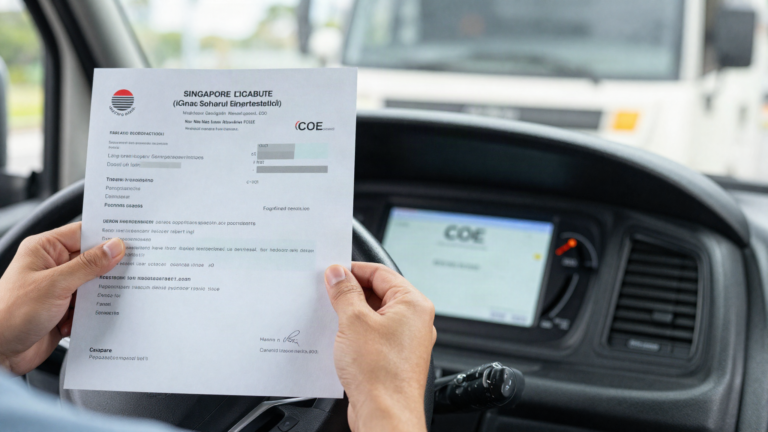
COE Category C is LTA’s bidding category for “goods vehicle and bus” — a single pool that every LGV, HGV, VHGV, GPV and bus registration draws from, regardless of size. Unlike car COE categories (A and B, split by engine capacity and power output), Category C makes no internal distinction between a compact delivery van and a 20-tonne lorry. They’re bidding against each other for the same certificates.
Practical consequence: Category C premiums move with total demand across the whole commercial vehicle market, not demand for your specific vehicle size. A spike in construction-sector lorry purchases can push up the COE cost of the small parcel van you’re trying to register, even though the two have nothing else in common. Budget against the category’s bidding trend, not just prices for vehicles that look like yours. For the mechanics of bidding, quotas and how premiums are set, see our detailed guide to COE Category C.
Matching Vehicle Class to Business Use Case
The weight band that fits your business is a function of what you carry and how often, not what looks impressive parked outside the office. A rough map of use case to class:
Compact vans and small LGVs — last-mile and parcel delivery
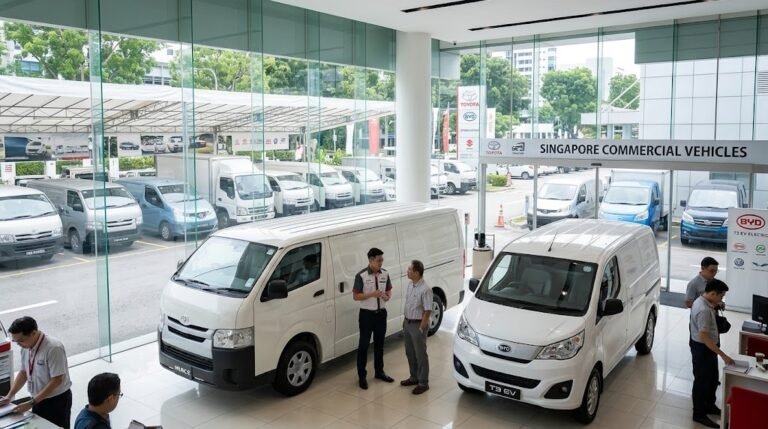
If the job is dropping off parcels, food orders or small retail stock across multiple stops a day, you want the smallest LGV that clears your payload with margin, not the biggest one your COE budget allows. Compact vans across brands like Toyota, Nissan and various light commercial ranges compete here; what decides the purchase is cargo volume, fuel or electric range for your routes, and how tight the turning circle is for HDB estate deliveries.
Medium vans and panel trucks — trade and service work
Electricians, aircon servicing, plumbing, and similar trades typically sit in the upper LGV or GPV band — enough payload for tools, parts and sometimes a second technician, without tipping into HGV territory and its licensing requirements. A GPV configuration is worth considering here if the same vehicle needs to carry a small crew as often as it carries equipment.
Heavy and very heavy lorries — freight and logistics
Distribution runs, construction material haulage and bulk freight are where HGV and VHGV vehicles earn their keep. Brands like Isuzu, Hino, Mitsubishi Fuso and others all field rigid trucks here; what matters for an SME is payload capacity, body configuration (curtain-sider, tipper, box), and whether your drivers already hold the licence class the vehicle requires — which, as covered below, is not automatic.
Buses — staff and passenger transport
Once a business is regularly moving ten or more staff on a fixed route — shift changes at a plant, a worksite the public transport network serves poorly — a private bus registration starts to pencil out against per-trip charter. It’s rarely the first vehicle a fleet buys, but for manufacturing, construction and logistics operators it often becomes the highest-utilisation asset once justified.
The Licence Question: Who Can Actually Drive It
This is the factor that trips up more first-time fleet buyers than COE cost does. A vehicle’s weight class and the driving licence class needed to operate it are directly linked, and the two systems don’t map onto each other the way you’d guess from the vehicle’s marketing name.
In broad terms, based on Traffic Police’s licence classifications: Class 3 and 3A licence holders (the standard car licence most staff already hold) can drive goods vehicles and small buses up to 2,500kg unladen weight for conventional vehicles — raised to 3,000kg unladen for electric light goods vehicles and electric small buses. Traffic Police first raised the ceiling in December 2025 for a limited set of models under an interim exemption order, then extended it in June 2026 to cover all electric light goods vehicles and electric small buses at that weight, not just the models on the original list. Anything heavier requires a Class 4 licence, and heavy buses running as omnibuses require Class 4A. Class 5 covers locomotives and trailer combinations, relevant mainly to VHGV operators pulling trailers.
Note the distinction between unladen weight (used for licensing) and maximum laden weight (used for LTA’s LGV/HGV/VHGV classification) — they are not the same figure, and a vehicle can sit comfortably inside the LGV registration band while still requiring a Class 4 licence to drive, depending on its unladen weight. Check both numbers before assuming your existing driver pool can operate a new purchase.
Goods vehicle drivers need the correct licence class but not a vocational licence. Bus drivers are different: private hire buses, school buses and excursion buses require a Bus Driver’s Vocational Licence (BDVL) on top of a Class 3 or 3A licence, and public omnibus drivers need an Omnibus Driver’s Vocational Licence (ODVL) with Class 4A. For the fuller picture on driver eligibility, work pass conditions and compliance obligations, see our guide to driver compliance in Singapore.
Practical Factors Beyond the Spec Sheet
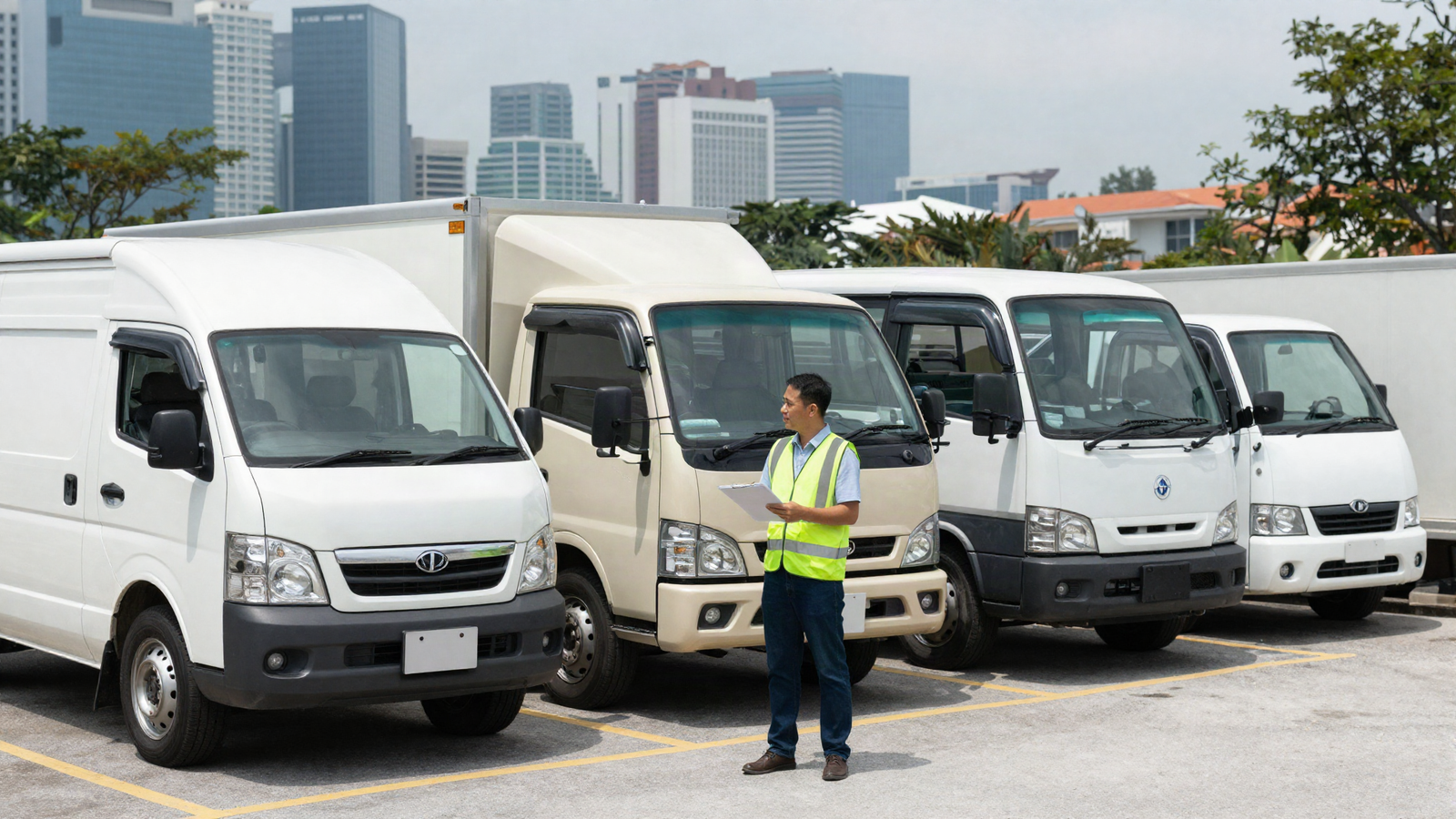
Weight class and licensing get most of the attention because they’re regulatory and easy to look up. The factors that actually kill a purchase decision late in the process tend to be physical.
Payload versus gross weight
Buying to the weight class ceiling instead of your actual load pattern is a common mistake. A vehicle rated near the top of the LGV band leaves almost no margin once you add a driver, fuel, and a full day’s cargo — and overloading a goods vehicle is a separate offence with real enforcement risk.
Height and parking clearance
Multi-storey carparks, loading bays under residential blocks, and covered walkways across Singapore’s built-up areas often impose height clearances that rule out taller box vans and lorries outright. Check the actual clearance at every regular stop on your route — not just at your own yard — before committing to a vehicle height.
Turning radius and estate access
HDB estate roads, industrial park internal roads and older shophouse frontages weren’t designed around HGV turning circles. A vehicle that’s technically the right weight class for the job can still be the wrong physical fit if your delivery points are inside estates built for smaller traffic.
Financing and Leasing Considerations by Vehicle Class
Vehicle class affects financing terms more than most buyers expect. Lenders treat a compact LGV, a mid-size HGV lorry, and a VHGV prime mover as different risk profiles — loan tenure, residual value assumptions and the depreciation curve on COE all shift with class, and heavier vehicles with longer working lifespans sometimes get different tenure terms than light vans that turn over faster.
Leasing is worth weighing seriously against outright purchase for HGV and VHGV vehicles specifically, since the capital outlay and COE exposure are largest at that end, and utilisation for a single specialised lorry can be harder to plan against than for a general-purpose van. For a walk-through of loan structures, down payment expectations and how COE renewal timing factors into the decision, see our guide to commercial vehicle financing. And if you’re still at the stage of comparing new versus used, or weighing dealer financing against a bank loan, our broader guide to buying a commercial vehicle in Singapore covers that ground in more detail.
FAQ
What’s the difference between an LGV and a GPV in Singapore?
Both can have a maximum laden weight in a similar range, but an LGV is registered purely as a goods carrier while a GPV (goods-cum-passenger vehicle) is built and registered to carry both cargo and passengers — think a twin-cab pickup or a panel van fitted with rear seating. The GPV’s MLW ceiling is 5,000kg, slightly above the 3,500kg LGV threshold.
Does COE Category C separate vans from lorries?
No. Category C is a single COE bidding pool covering all goods vehicles and buses regardless of weight class, unlike the car categories which split by engine specification. A small delivery van and a heavy lorry bid against the same quota.
Can any of my staff drive a lorry I’ve just bought?
Only if they hold the driving licence class the vehicle’s unladen weight requires. A standard Class 3 or 3A car licence covers goods vehicles up to 2,500kg unladen (3,000kg for all electric light goods vehicles and electric small buses, a threshold phased in between December 2025 and June 2026) — anything heavier needs a Class 4 licence. Check the vehicle’s unladen weight, not its LGV/HGV registration band, against your drivers’ licence classes.
Do I need a vocational licence to drive a company lorry?
No — vocational licences in Singapore apply to taxis, private hire cars and buses (BDVL, ODVL, TDVL, PDVL), not to goods vehicles. A goods vehicle driver needs the correct driving licence class only.
Is it cheaper to charter a bus than to buy one for staff transport?
For irregular or low-frequency runs, chartering a private hire or excursion bus operator is almost always cheaper once you account for COE, maintenance, driver licensing and downtime on a vehicle you own. Owning a private bus only starts to make financial sense once you have a consistent, high-frequency route to run it on.
Why would a vehicle marketed as a “light lorry” register as an HGV?
Because LTA’s classification runs strictly on maximum laden weight, not on marketing terminology. If a vehicle’s MLW crosses 3,500kg, it registers as a heavy goods vehicle regardless of how the dealer describes it. Always confirm the exact MLW figure before assuming a vehicle sits in the class you expect.
Author: Keith Kwai, editor and publisher of SGFleetGuide, with 25 years experience in B2B and B2C companies. More about the author.
Last updated: 11 September 2026
Sources: LTA — Goods Vehicle and Engineering Plant | LTA — Bus Classifications | LTA — Certificate of Entitlement (COE) | LTA — Vocational Licence Application | Singapore Police Force — Singapore Driving Licence Classes | SPF — Revised Driving Licence Requirements for Electric Light Goods Vehicles and Electric Small Buses
3 Comments