Tuas Port Phase Two breaks ground as city terminals prepare to move west
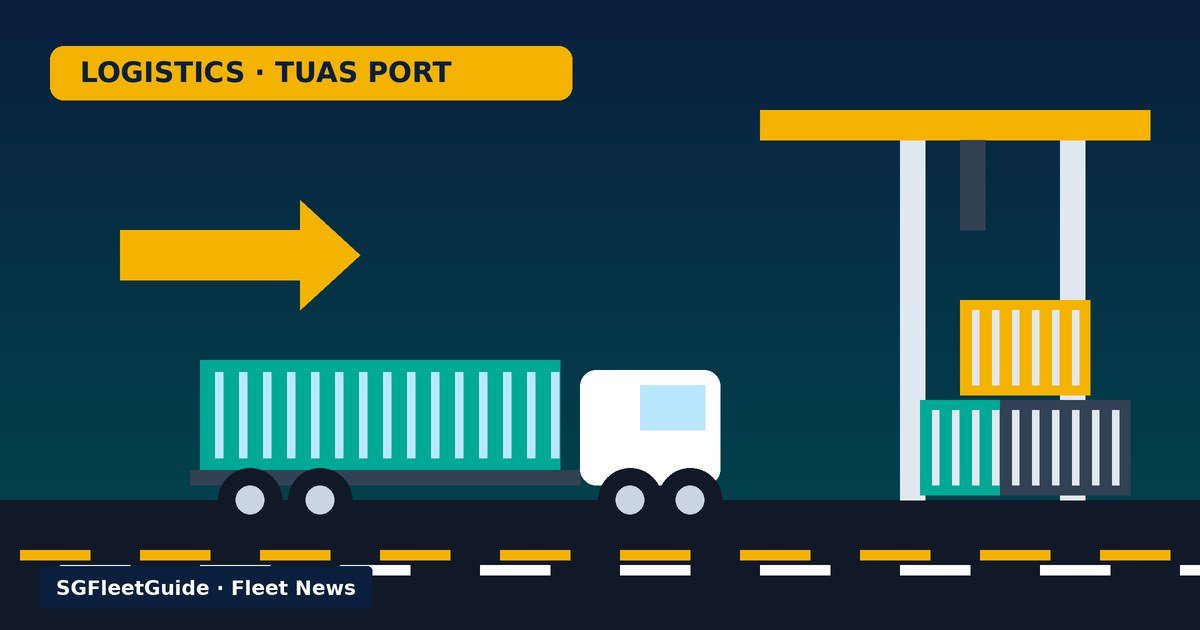
Phase Two is the third and largest of Tuas Port’s four sections. According to PSA’s release, it will have 21 berths and 8.6km of wharf, and close to 1,000 AI-enabled guided vehicles will move containers inside the terminal once it is complete.
Tuas Port runs 15 berths today. PSA expects to move all Tanjong Pagar, Keppel and Brani operations to Tuas by 2027, with Pasir Panjang following by the 2040s, CNA reported. The Minister’s speech also named a PSA Supply Chain Hub at Tuas to put logistics and warehousing next to the port.
What this means for fleet operators
This matters most to container hauliers running prime movers and trailers, and to freight forwarders and warehouse operators whose trucks collect from or deliver to the port. Every container that today leaves Tanjong Pagar, Keppel or Brani should leave from Tuas instead by 2027, on PSA’s plan. For a fleet based in the east or north, that changes trip times, driver hours and the economics of each vehicle.
Where your trucks will be running
Map where your container work actually goes. Pull three months of trip records and split them by terminal and by customer site. Jobs that start or end at Tanjong Pagar, Keppel or Brani are the ones that will move west. If most of your customers sit in Jurong, Tuas or the western industrial estates, the change may shorten some runs. If they are in Changi, Loyang or the north, expect longer empty legs back to your depot. Use your telematics data rather than guesswork; it shows real trip times by time of day.
Cost impact
Longer runs mean more fuel, more tyre and brake wear, and fewer trips per prime mover per shift. Before you quote 2027 rates, rework your cost per trip using your own fuel and maintenance figures for the new routes. Review contracts that fix a price per container without a route or distance clause. If a customer’s boxes will now come from Tuas, raise it at the next renewal rather than absorbing the extra mileage for the full term. Also check whether your depot and overnight parking still sit in the right place. A yard far from the west adds dead mileage to every trip.
What to do now
- List which customers and contracts depend on the city terminals, and when each contract is up for renewal.
- Ask your main customers whether their cargo or warehousing is moving closer to Tuas, including to the new supply chain hub.
- Recheck shift lengths and rest breaks for drivers on the longest new routes.
- Look at parking and depot options in the west if a large share of your work is shifting there.
- Set a date in early 2027 to compare planned and actual trip times.
Driver briefing
- Port routes and gate procedures will change as operations move. Read every terminal notice before the shift, not at the gate.
- Inside an automated terminal, manned trucks share space with driverless guided vehicles. Follow lane markings, speed limits and crossing rules exactly.
- Longer runs add fatigue. Take the planned break, and report tiredness before you drive, not after. Our fatigue management guide covers what employers should put in place.
- Secure every container and twist lock before leaving the terminal, whatever the queue behind you.
Renew, replace or switch
If a prime mover’s COE expires in the next year or two, factor in the new route pattern before you decide. A unit that will spend more hours on long western runs ages faster, which shortens the payback on renewing it. Run the numbers both ways with the PQP renewal calculator before committing.
Source: CNA, 20 November 2026 — Read the original
General information, not financial advice. Check current figures with LTA, your lender or your insurer.